Tanzania does not play by the rules of traditional four-season calendars. There are no falling autumn leaves or snowy winters here. Instead, the country moves to the primal rhythm of the rains. This rhythm dictates where the animals move, how the landscapes transform from golden dust to emerald velvet, and ultimately, when you should step off the plane.
Whether you are dreaming of the thundering hooves of the great wildebeest migration, the silent majesty of Mount Kilimanjaro, or the turquoise stillness of the Zanzibar coast, timing is your most powerful tool.
When Should You Book Your Tanzanian Adventure?
The "best" time is a moving target. If you ask a professional photographer, they might point to the dramatic skies of the wet season. If you ask a family looking for their first safari, they will almost certainly point to the dry winter months. The truth is that Tanzania is a year-round destination, but the best months for your experience will change radically depending on which time of year you choose.
Defining Your Travel Goals
Before you check your calendar, you must define your priorities. Are you looking for the easiest wildlife viewing, where animals congregate around shrinking waterholes? Are you a budget-conscious traveler looking to avoid the "peak season" price hikes? Or perhaps you are a birdwatcher hoping to see migratory species from Europe and North Africa?
If your heart is set on the Great Migration, your dates are non-negotiable and must follow the herds. If you want to summit Kilimanjaro, you need to prioritize clear skies and manageable temperatures. By defining what "success" looks like for your trip, the right season will usually reveal itself.
Ready to Start Planning? Global Basecamps can help you plan your Tanzania journey around your priorities - from the Great Migration to ideal safari conditions. Start planning your custom Tanzania trip!
Tanzania at a Glance: The Weather and Wildlife Cycles
Tanzania sits just south of the Equator, meaning temperatures remain relatively tropical year-round. However, the country is divided by two distinct rainfall patterns that act as the conductor for all biological life.
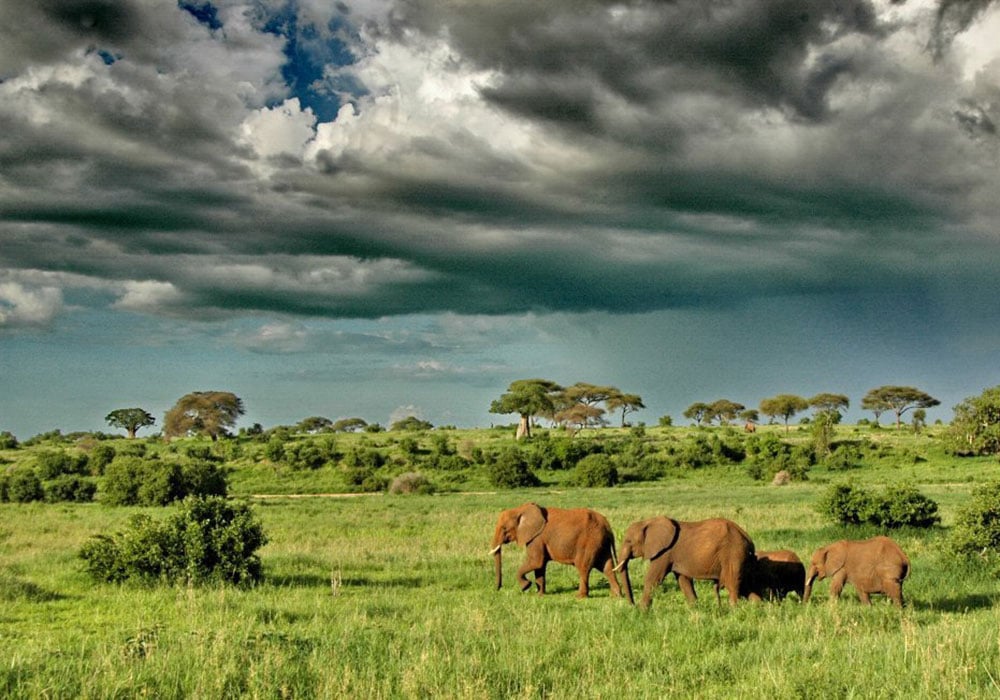
Elephants walking through green grasslands beneath a vast, cloud-filled sky.
The Tropical Rhythm: Wet vs. Dry Seasons
The long dry season (June to October) is the period of predictability. The sun shines, the air is crisp, and the bush thins out. This is the classic safari experience. Water becomes a scarce commodity, forcing wildlife to gather at permanent rivers and waterholes. For a visitor, this is like being given a map to the best seats in the house; you simply find the water, and the animals will come to you.
The Wet Season is split into two parts: the "short rains" in November and December, and the "long rains" from March to May. During these times, the dust settles, the air clears of haze, and the plains erupt in vibrant green. While travel can be more challenging due to muddy roads, the landscape is at its most beautiful.
Understanding the Regional Microclimates
Tanzania is massive—nearly twice the size of California—and its geography creates distinct microclimates. The Northern Circuit (Arusha, Serengeti, Ngorongoro) sits at a higher altitude in the highlands, meaning mornings can be surprisingly chilly, even freezing.
The Coastal Region, including Dar es Salaam, and Zanzibar are hot and humid year-round, influenced by the Indian Ocean’s monsoon winds. Meanwhile, the remote Southern and Western Circuits (Selous, Ruaha, Katavi, and Mahale) are lower in altitude and can become blisteringly hot and humid during the rainy months, leading many camps in these areas to close entirely from March to May.
The Best Overall Time to Visit: June to October
If you want the quintessential Tanzanian experience with the fewest logistical headaches, aim for the window between June and October. This is the "Cool Dry Season," and it is widely considered the gold standard for travel.
Why the Dry Season Reigns Supreme
As the rain vanishes, the vegetation withers. In the Serengeti National Park and Tarangire National Park, the tall golden grass disappears, removing the hiding spots for lions and leopards. This makes spotting predators significantly easier.
Furthermore, the lack of standing water means mosquitoes are less prevalent, and the risk of malaria—while still present—is at its lowest. The weather is also exceptionally pleasant; you can expect bright blue skies and daytime temperatures in the mid-20s Celsius (70s Fahrenheit), though you’ll need a heavy fleece for those pre-dawn game drives.
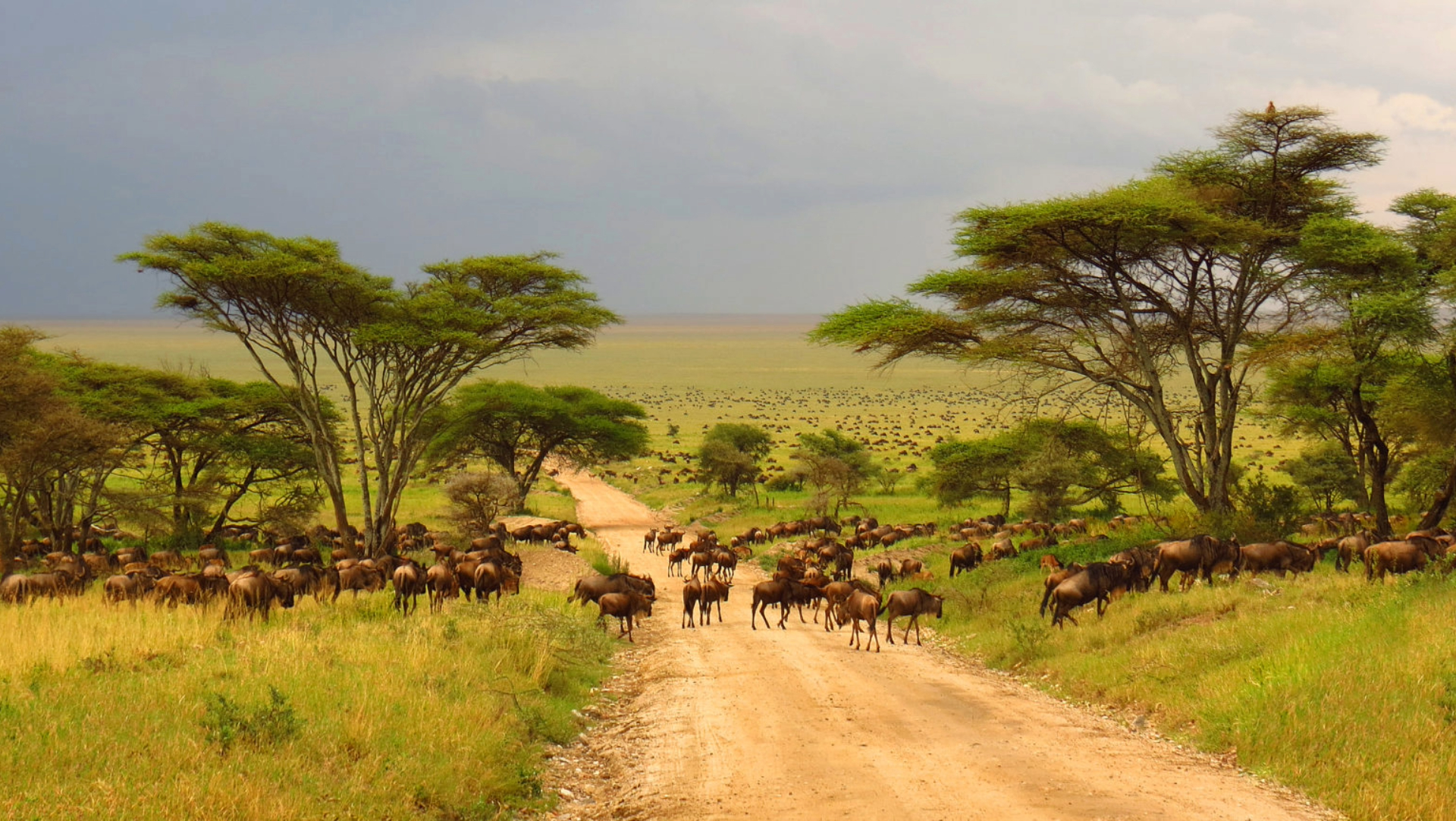
A herd of wildebeest crossing a savannah road on the plains of the Serengeti.
The Peak Season Trade-offs
The secret is out, however. Because this is the best time for wildlife and game viewing, it is also the busiest and most expensive time. The Ngorongoro Crater and the Central Serengeti can feel crowded, with several vehicles occasionally hovering around a single sighting. The best accommodations often book out a year in advance. If you crave solitude, you may need to head to the more remote parks like Ruaha or Katavi during this window.
Planning to travel during peak season? Global Basecamps can help you secure the best lodges and design a seamless itinerary—before availability fills up. Start planning your Tanzania safari!
The Month-by-Month Breakdown
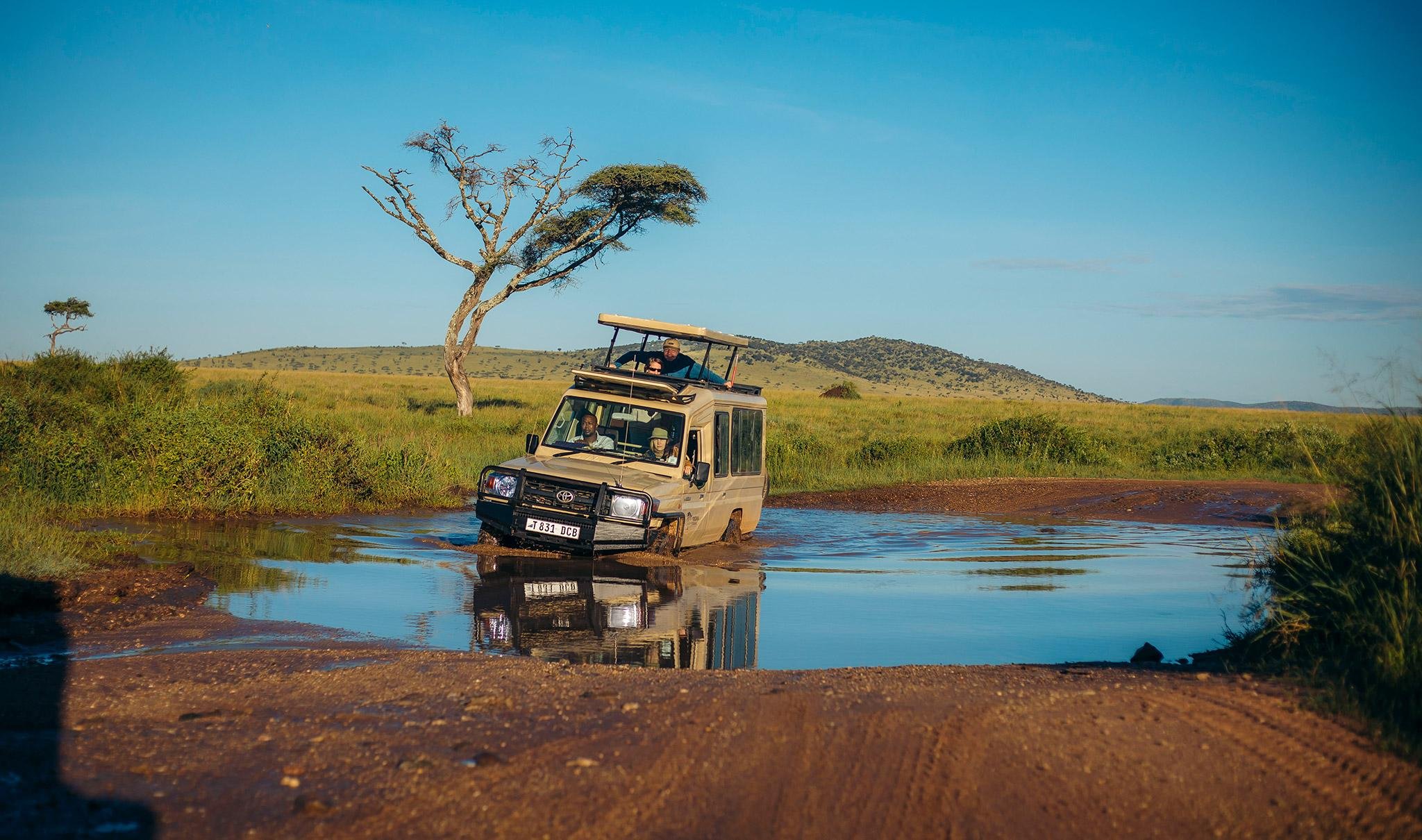
A safari vehicle crossing a shallow waterhole on the plains of the Serengeti.
January and February: The Calving Season
After the short rains of November and December, the Southern Serengeti transforms into a lush carpet of short grass. This is the "Calving Season." In a synchronized event, hundreds of thousands of wildebeest calving occurs within a two-to-three-week window.
It is a time of incredible vulnerability and high drama. Where there are thousands of wobbly-legged calves, there are scores of opportunistic cheetahs, lions, and hyenas. The weather is generally dry and hot, making it a good time and a fantastic "secret" window for those who want to see the Migration without the July crowds.
March: The Transition Month
March is the bridge between the dry heat of February and the heavy rains of April, with conditions shifting significantly by the end of the month. The first half of the month is usually beautiful, but by late March, the clouds begin to gather. This is a gamble month; you might get lucky with clear days, or you might find the "Long Rains" arriving early. Prices begin to drop, and the parks become much quieter.
April and May: The Long Rains (The "Green" Season)
This is the peak of the rainy season. While the landscapes are incredibly lush and green, this period is generally not recommended for travel due to the risk of significant rainfall and flooding. Roads—especially secondary routes—can become impassable, and some lodges in more remote areas close for the season.
For the most flexible and adventurous travelers, it can still offer solitude and lower prices, but for most visitors, this is the most challenging time to plan a safari.
June to August: Prime Safari Conditions
As the rains subside, the Great Migration begins its journey north. By June, the herds are moving through the Western Corridor and across the Grumeti River.
Toward the end of July, the first river crossings begin in the north, though herds often splinter into smaller groups at this stage. July and August are among the most popular months of the year, with cool, dry weather and excellent overall game viewing conditions.
September and October: High Drama at the Rivers
By September, the landscape is dry and dramatic. This is when river crossings are at their most intense, with larger concentrations of wildebeest gathering at the Mara River. The massive, iconic crossings most travelers hope to witness are more likely during late August and into September.
This is also an excellent time for Tarangire and Ruaha National Park, as wildlife congregates around permanent water sources, creating incredible viewing opportunities.
November and December: The Short Rains
The "Short Rains" typically arrive in November, which is still a great time to visit for those seeking fewer crowds. Unlike the heavy deluges of April, these are often brief afternoon showers that don't disrupt travel plans significantly. The dust is washed away, and the migratory birds begin to arrive from the northern hemisphere. December is a popular holiday month, so expect prices to spike around Christmas and New Year.
Planning Around the Great Migration
The Great Migration is often called "The Greatest Show on Earth," but it is not a single event. It is a perpetual loop driven by the search for water and green grass.
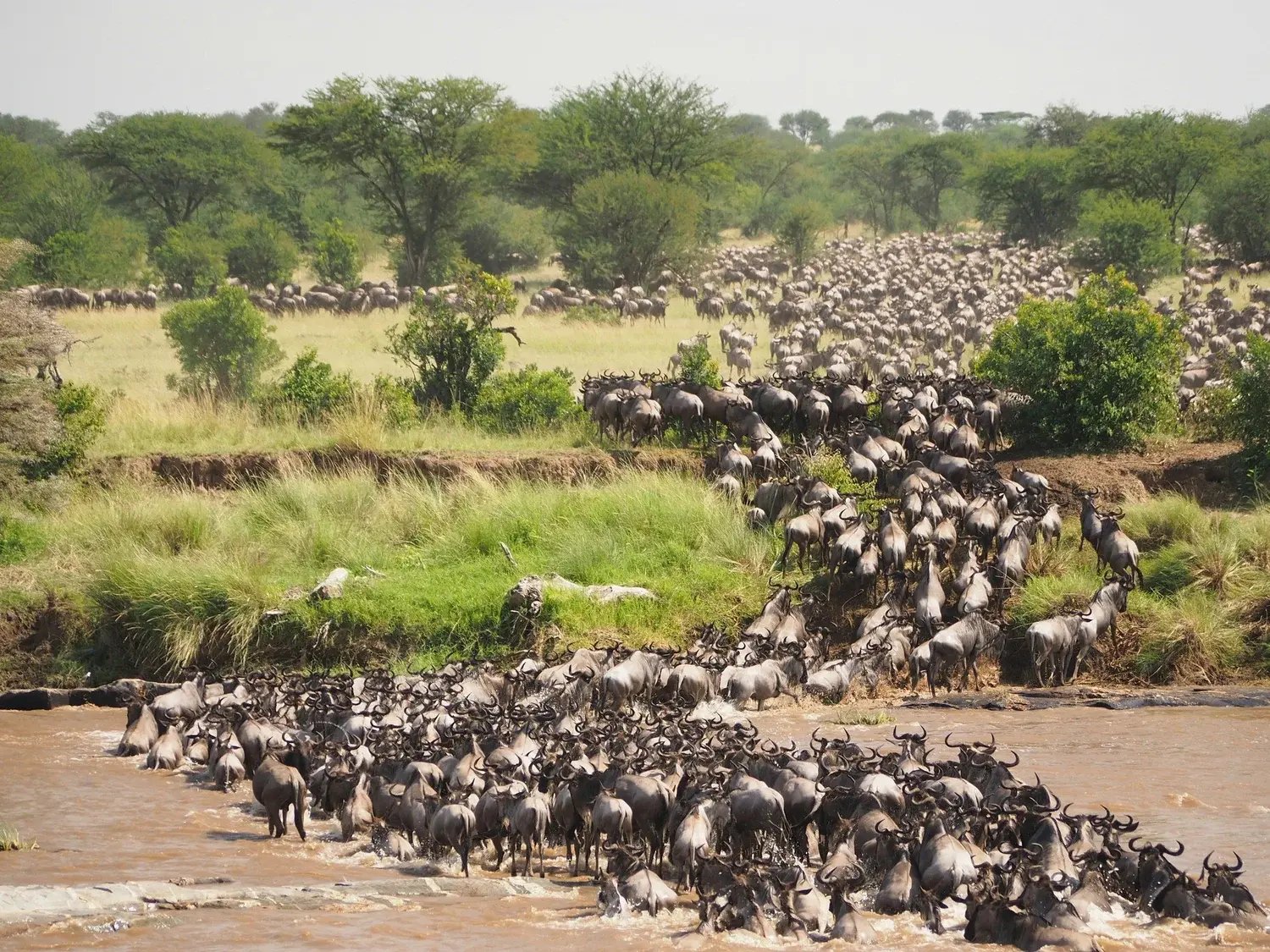
A herd of wildebeest crossing a river during the Great Migration in the Serengeti.
What is the Great Migration?
Imagine 1.5 million wildebeest, 200,000 zebras, and 300,000 Thompson’s gazelles moving in a giant clockwise circle across the Serengeti-Mara ecosystem. It is a biological imperative that never stops. To see it, you must be in the right place at the right time.
The Mara River Crossings: When and Where to Watch
The most sought-after moment is the Mara River crossing. This typically happens between July and September. It requires patience; herds may gather on the riverbanks for days, hesitant to jump, only to be triggered by a single brave individual. When the "push" happens, it is chaotic, loud, and heartbreakingly beautiful. To witness this, you should book lodges in the Kogatende or Lamai regions of the Northern Serengeti.
Chasing the Herds: A Southern vs. Northern Circuit Strategy
If you visit between January and March, your strategy should focus on the Southern Serengeti (Ndutu). This is where the herds congregate for calving. If you visit between July and October, you must head to the North. The "Central Serengeti" (Seronera) is a great safety net year-round, as there are always "resident" animals and parts of the migration passing through at various stages.
Best Time for Specific Activities
While wildlife is the main draw, Tanzania offers much more. Your timing should align with your specific interests.
The Best Time for a Safari (National Parks)
For the Northern Circuit (Serengeti, Ngorongoro, Manyara), June to October is unbeatable. For the Southern Circuit in southern Tanzania (Ruaha, Nyerere/Selous game reserve), the window is narrower; July to October is best, as these parks can become extremely hot and overgrown during the wet months.
The Best Time to Climb Mount Kilimanjaro
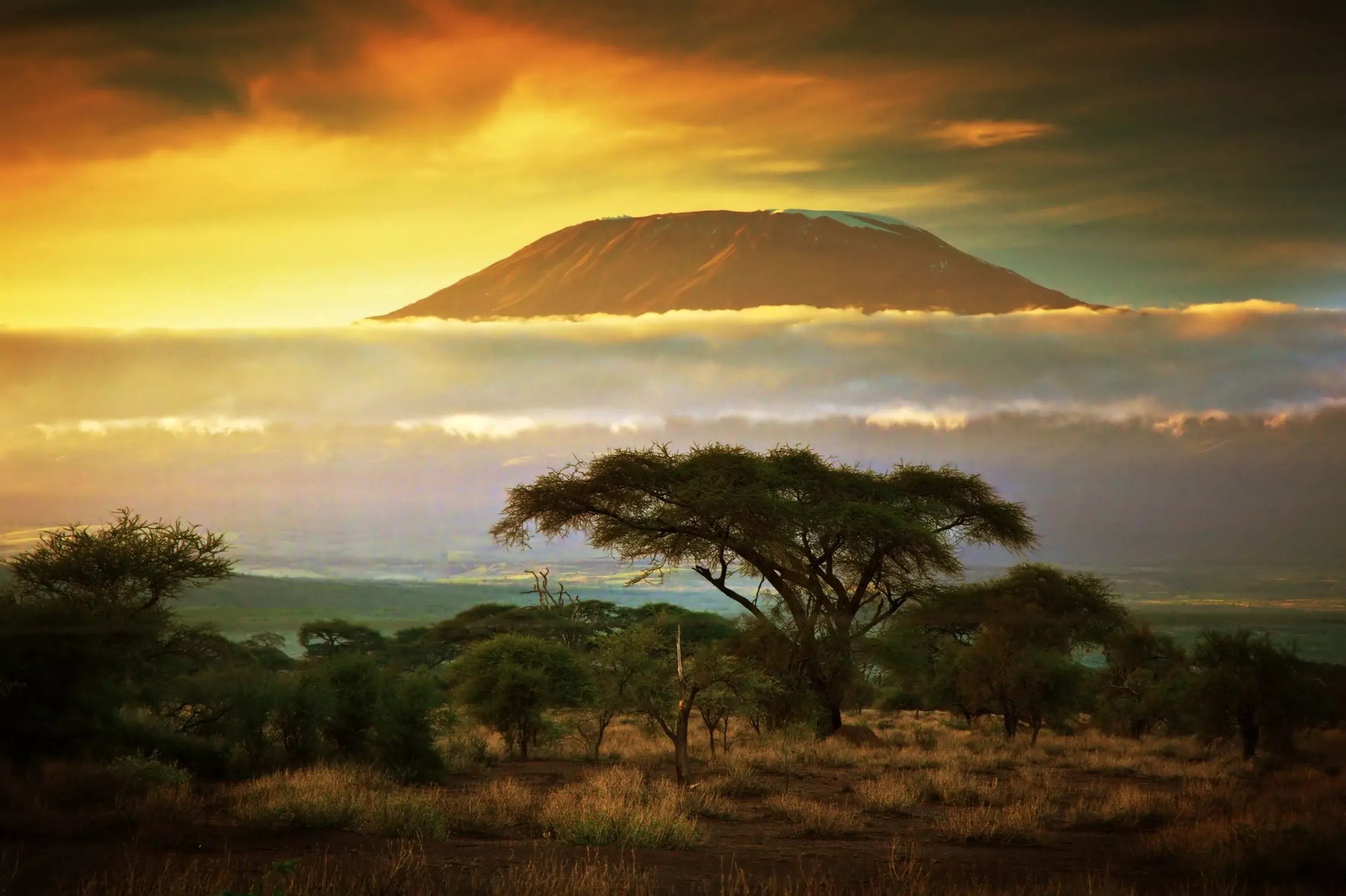
You can climb Kilimanjaro year-round, but you probably shouldn't. The best windows are January to March (colder but quieter) and June to October (clearer skies and more stable weather). Climbing in April or May is a recipe for misery, as you will likely be trekking through mud, rain, and thick fog, which obscures the very views you climbed to see.
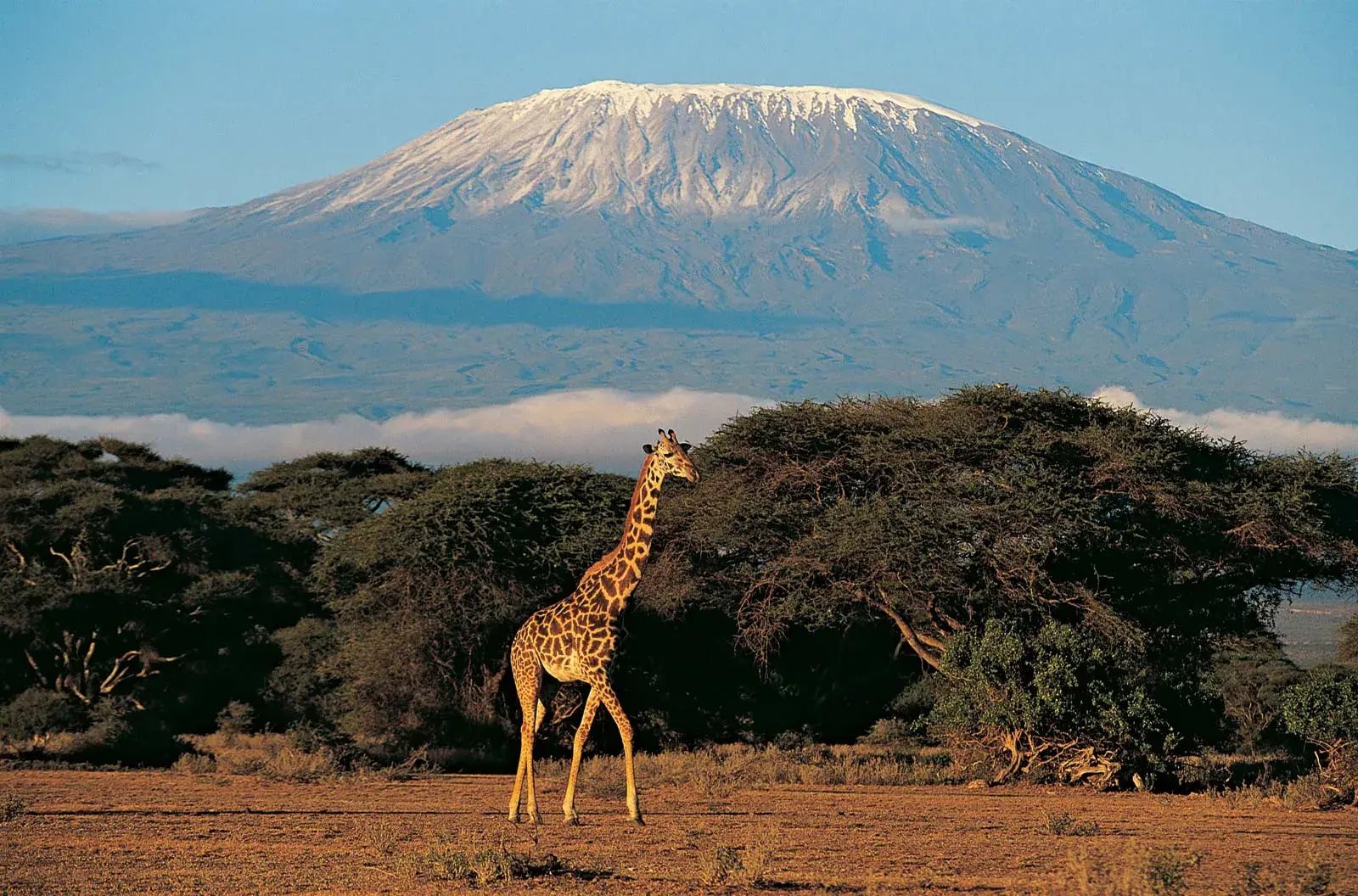
A giraffe on the African savannah with Mount Kilimanjaro rising snow-capped in the background.
The Best Time for a Beach Escape to Zanzibar
Zanzibar is best enjoyed for snorkelling with whale sharks when the sun is out and the humidity is manageable. June to October is perfect, offering balmy days and cool evenings. December to February is also excellent, though it is the hottest time of the year. Avoid April and May, as many island resorts close for maintenance during the heavy rains, and the "spice island" can feel quite soggy.
Let Global Basecamps design a seamless experience from the Serengeti to Zanzibar. Start with the Private Wildlife Safari & Zanzibar Escape.
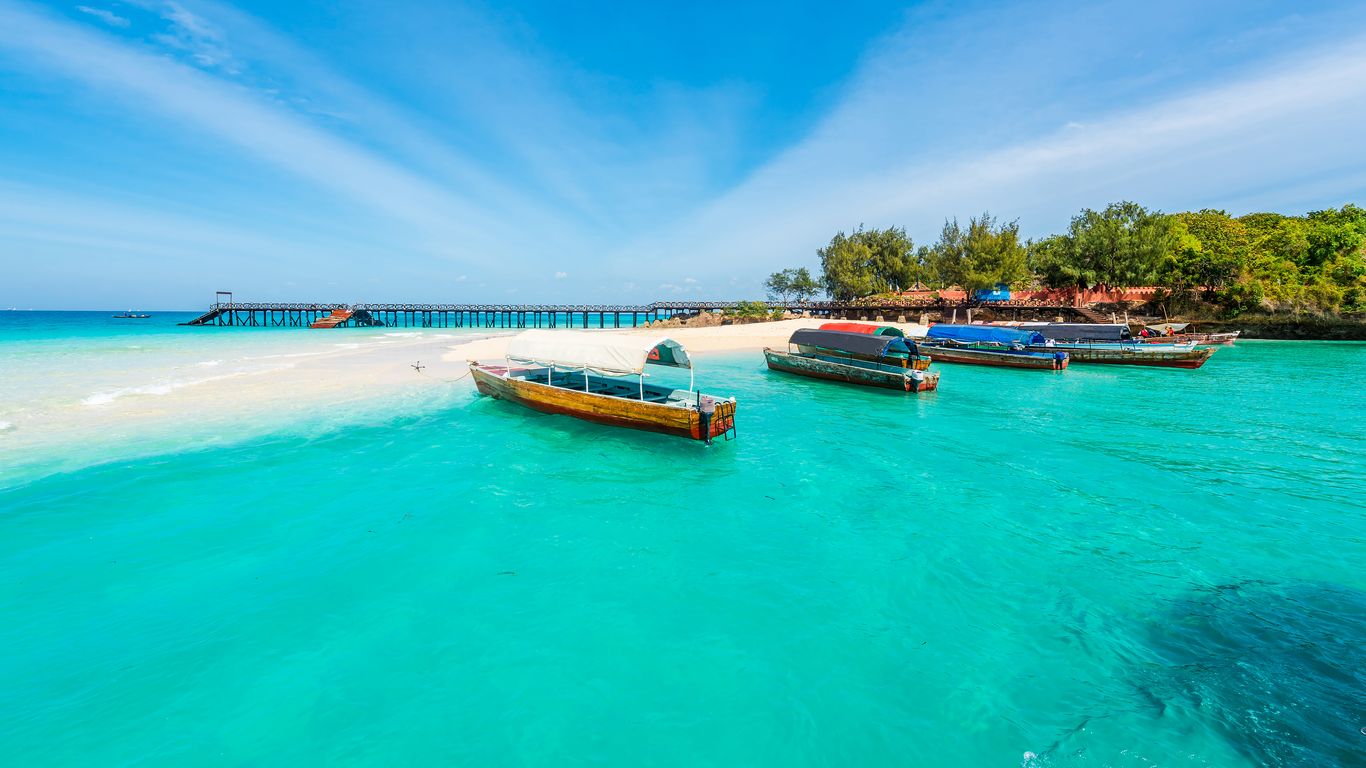
Traditional boats floating in turquoise waters off a white sand beach in Zanzibar.
The Best Time for Birdwatching
If you are a "twitcher," the wet season is your prime time. From November to April, Tanzania hosts an incredible array of migratory birds from Europe and Asia. The resident birds are also in their bright breeding plumage, and the lush vegetation provides ample nesting activity. Lake Manyara and the Ngorongoro Crater become avian paradises during this window.
Practical Considerations for Your Trip
Timing your trip isn't just about the weather; it’s about the logistics of travel in East Africa.
Budgeting for Peak vs. Low Season
Tanzania is not a "budget" destination in the traditional sense, but you can save thousands of dollars by traveling in the shoulder seasons (June or November). During the "Green Season" (April/May), luxury lodges that normally charge $1,500 per night might drop their rates to $700. If you are willing to trade a bit of rain for luxury at half the price, the low season is a brilliant tactical move.
What to Pack for Different Seasons
In the dry season, the most important rule is layers. You will start your day in a heavy jacket and beanie for the 6:00 AM game drive, but by noon, you’ll be in a T-shirt and shorts. In the wet season, high-quality waterproof gear is essential—not just for you, but for your camera equipment. Regardless of the season, stick to neutral colors (khaki, olive, tan). Avoid dark blue and black, as they attract tsetse flies, which have a nasty bite.
Health and Safety: Malaria Risks During the Wet Season
Tanzania is a malaria-endemic country. The risk is higher during and immediately after the rainy seasons when standing water provides breeding grounds for mosquitoes. Regardless of when you travel, consult a travel clinic about prophylaxis. During the wet season, be extra diligent about using repellent and wearing long sleeves in the evenings.
There is No "Wrong" Time, Only the "Right" Experience
Tanzania does not have a "bad" season. If you go in May, you get emerald landscapes and low prices. If you go in July, you get world-class wildlife viewing and the drama of the migration. If you go in February, you witness the miracle of new life on the southern plains.
The "right" time is simply the one that aligns with your dreams. Tanzania is a land of abundance, and whenever you choose to step into its wild embrace, it will have a story waiting to be told.
Frequently Asked Questions About Visiting Tanzania
Is it worth visiting Tanzania during the rainy season?
Absolutely, especially for experienced travelers or those on a budget. The "Green Season" (April-May) offers stunning photography, fewer crowds, and lower prices. Just be prepared for some rain and the fact that some remote camps may be closed.
When is the best time to see the Big Five?
The Dry Season (June to October) is the best time to see the Big Five (Lion, Leopard, Elephant, Buffalo, and Rhino). Low vegetation and scarce water sources make these animals much easier to track and spot, particularly in the Ngorongoro Crater and Serengeti.
How far in advance should I book my safari?
For the high season and peak periods (July–September and Christmas), you should ideally book 9 to 12 months in advance, especially if you want to stay in small, high-demand boutique camps near the migration river crossings. For the shoulder or low seasons, 4 to 6 months is usually sufficient.
Let’s Plan the Right Journey for You
Global Basecamps can help you design a fully customized journey tailored to your travel goals, timing, and style - so every moment feels intentional and effortless.
Start planning your custom Tanzania trip