Finding Your Perfect Window to Paradise
If you are currently staring at a map of Central America, wondering exactly when to pull the trigger on those flights to San Jose or Liberia, you aren’t alone. Costa Rica is a land of sensory overload - the scent of damp earth in a cloud forest, the adrenaline of a Pacific swell, and the sound of howler monkeys acting as your 5:00 AM alarm clock. But here is the catch: showing up at the wrong time can mean the difference between a golden sunset and a four-hour torrential downpour that washes out the only road to your hotel.
Deciding when to go isn't just about checking a weather app. It is about aligning your personal rhythm with the rhythm of the tropics. Whether you want to save on amenities or witness a thousand sea turtles nesting by moonlight, timing is your most powerful tool.
Why Costa Rica isn't a "one-size-fits-all" destination
Costa Rica is tiny - roughly the size of West Virginia - but it plays host to nearly 6% of the world’s biodiversity. Because of its jagged volcanic spine and two distinct coastlines, it doesn't have a single "climate." It has five distinct microclimates. You can be shivering in a fleece jacket in the mist of Monteverde at noon and sweating in a swimsuit on the beaches of Manuel Antonio by 3:00 PM.
This geographical complexity means that "the best time" depends entirely on your itinerary. If you follow a generic travel brochure, you might miss the fact that when the Pacific coast is drowning in October rain, the Caribbean coast is enjoying its driest, sunniest month of the year. Understanding these nuances is the first step toward planning a trip that feels like it was custom-made for you.
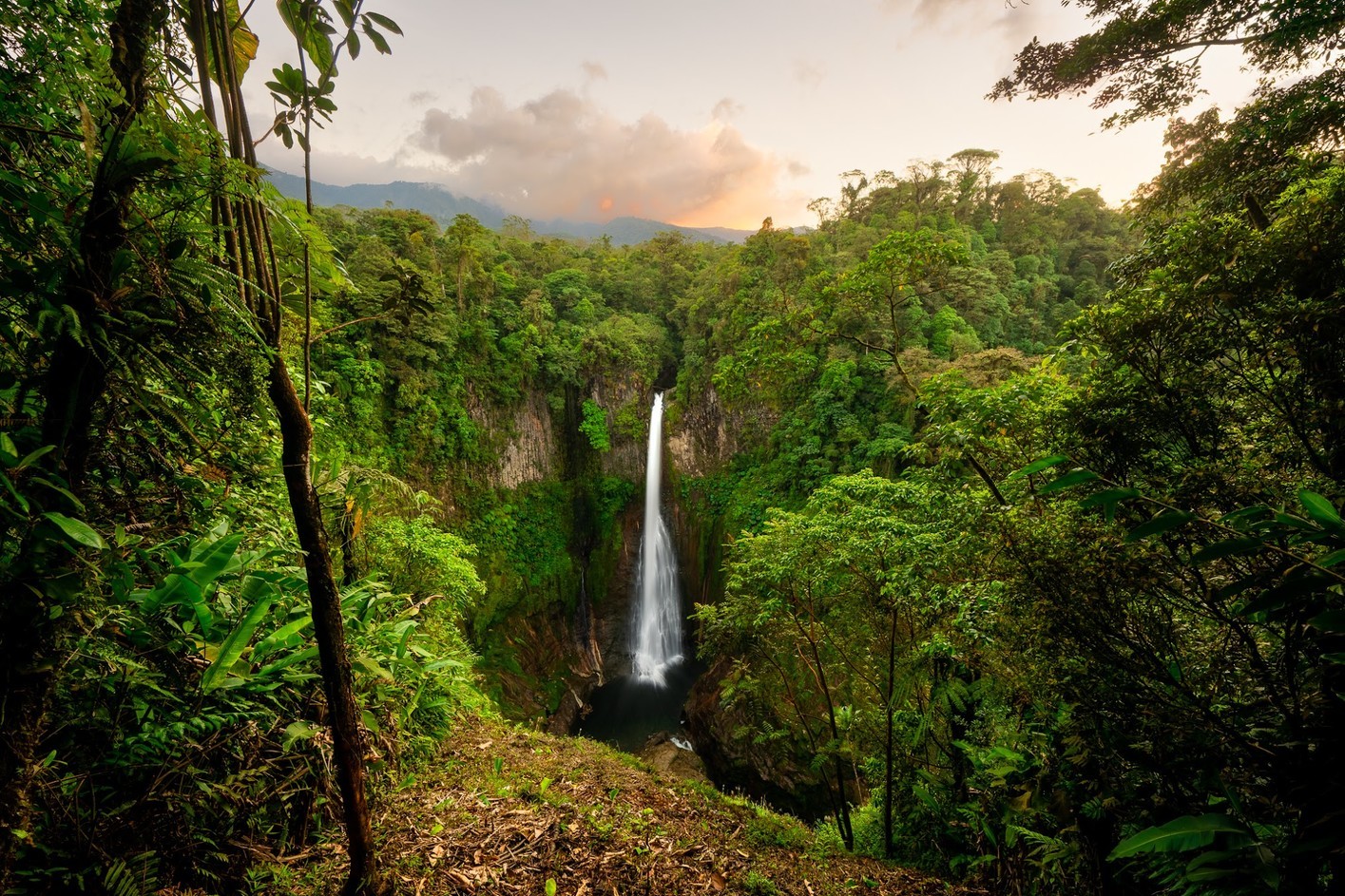
La Fortuna Waterfall plunging through a rainforest canyon near Arenal Volcano.
The Two Sides of the Coin: Dry Season vs. Green Season
In the tropics, we don't talk about winter or summer in the traditional sense. Instead, the year is a tug-of-war between two primary cycles: the Dry Season and the Green Season.
The Dry Season (November - April): Sun-Drenched and Bustling
Locals call this Verano (summer). From November through April, and especially during the peak season window of December to April, the rain taps turn off across most of the country. The skies are a relentless, brilliant blue, and the humidity drops to a comfortable crispness. This is the "guaranteed" weather window.
Because the weather is so predictable, this is also when the world descends upon Costa Rica. You’ll find bustling beach towns like Tamarindo, vibrant nightlife, and fully booked tours. The landscape transitions from a deep emerald to a golden, dusty brown, particularly in the northern Guanacaste region. It is the season of easy logistics, but it comes with a premium price tag and the need for dinner reservations weeks in advance.
The Green Season (May - November): Lush Landscapes and Lower Rates
Marketing departments rebranded the "Rainy Season" to the "Green Season," and for once, the PR spin is actually accurate. As the rains return in May, the parched earth explodes into life and the waterfalls regain their thunderous power. The colors become so vivid they almost look filtered.
Traveling during this window is a masterclass in value. Hotels often slash their rates by 30% to 50% during this low season, and the crowds thin out significantly. You’ll likely experience sunny mornings followed by a vigorous afternoon downpour - a perfect excuse for a siesta - before the skies clear again for evening cocktails. However, as the season progresses into September and October, the rains become more persistent, especially on the Pacific side.
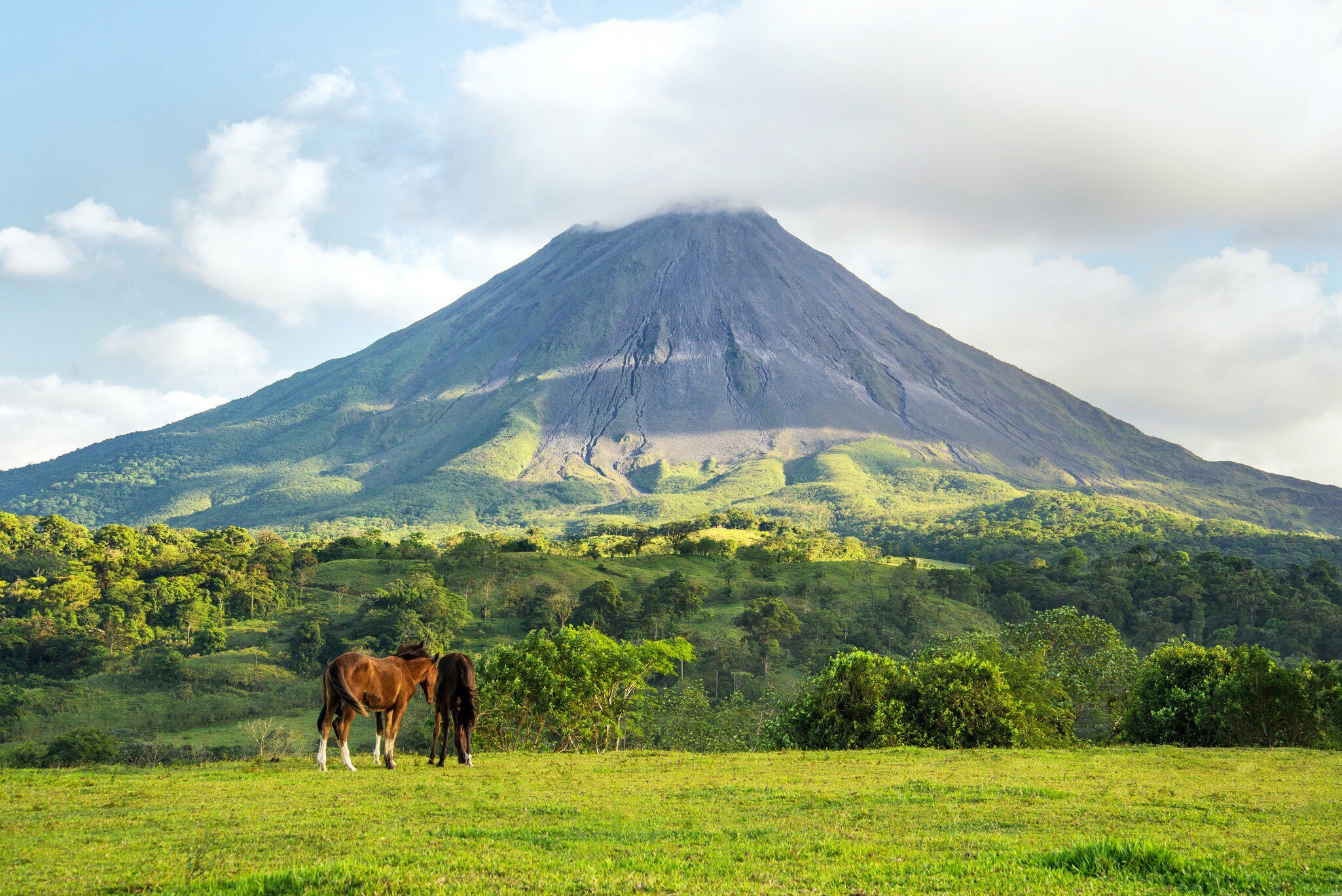
Two horses grazing in a pasture beneath the unmistakable conical silhouette of Arenal Volcano.
The Best Time to Visit for Every Type of Traveler
1. For the Sun-Seeker: Mid-December to March
If your goal is to return home with a deep tan and zero memories of rain, this is your window. During these months, the Pacific coast is a paradise of heat. The winds, known as "Papagayo winds," kick up in January and February, providing a cooling breeze that keeps the tropical heat from feeling oppressive. This is the time for outdoor weddings, catamaran tours, and lounging by the infinity pool without a cloud in sight.
👉 Ready to soak up that guaranteed sunshine? Our Beaches of Costa Rica Tour is built for travelers chasing warm sand and turquoise water.
2. For the Budget-Conscious: May, June, and September
For the savvy traveler, these months are the "sweet spots." May and June represent the shoulder season; the rains have started, but they are usually brief and predictable. You get the benefit of lower "Green Season" pricing while still enjoying plenty of outdoor time. September is the ultimate budget month - if you head to the Caribbean side (Puerto Viejo or Tortuguero), you’ll find the best weather of the year at the lowest possible prices.
3. For the Wildlife Enthusiast: August to October
Wildlife doesn't follow a calendar, but its major events do. If you want to see the "Arrival" (Arribada) of thousands of Olive Ridley sea turtles, you’ll want to be on the Pacific coast (specifically Ostional) during the darker moons of these wet months. Conversely, the humpback whales migrate through the Osa Peninsula and Uvita twice a year, but the most consistent sightings occur from August through October. Yes, you will get wet, but the natural spectacles are unrivaled.
👉 Want to witness Costa Rica’s wildlife up close, from nesting green sea turtles to hanging bridges over the jungle? Our Costa Rica Family Explorer Tour brings you face to face with it all.
4. For the Surfer: Timing Your Break by Coast
Surfing in Costa Rica is a year-round affair, but the "where" changes with the "when." From May through November, the Pacific coast sees the biggest, most consistent swells generated by storms deep in the Southern Hemisphere. This is "big wave" season for experienced chargers. If you are a beginner or prefer the Caribbean’s "Salsa Brava" reef break, aim for December through March, when the Caribbean swells are at their peak.
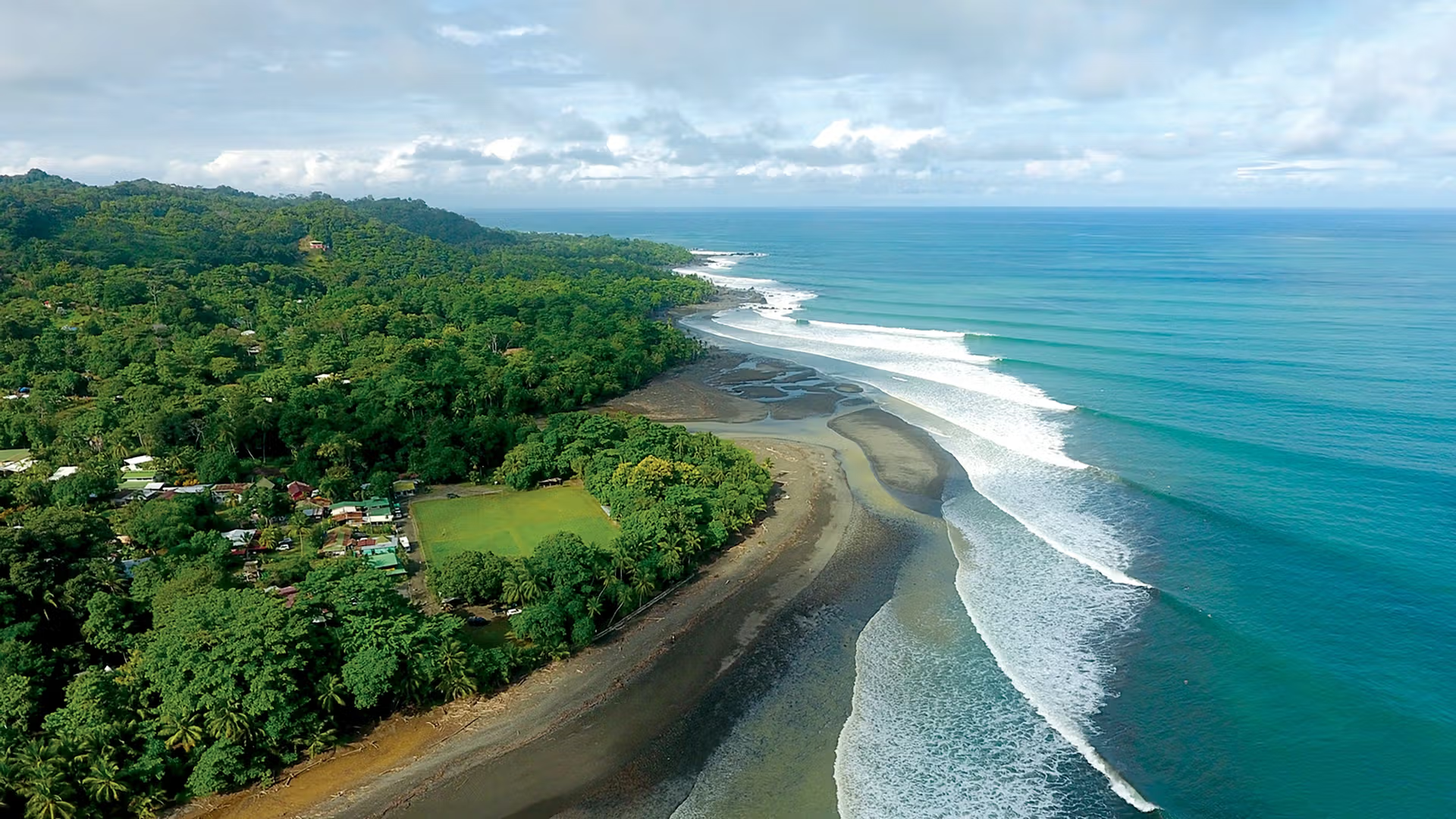
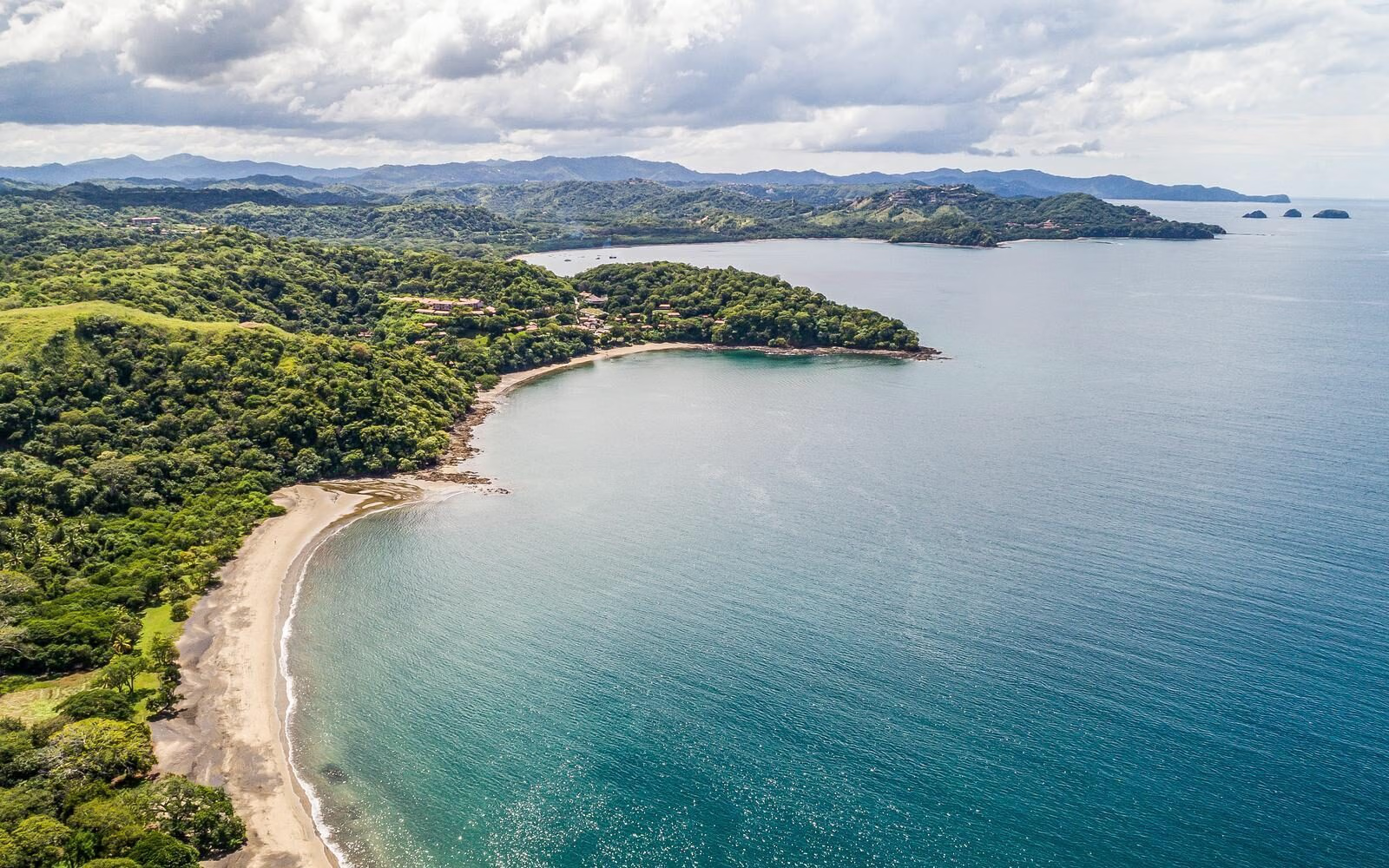
Aerial view of a curving jungle-lined surf beach on Costa Rica's South Pacific coast.
A Month-by-Month Breakdown of Costa Rica
January: The Peak of the Party
January is the height of the high season. The winds are blowing, the sun is out, and the holiday energy is still palpable. It is the most expensive time to visit, but also the most socially vibrant. Expect clear views of the Arenal Volcano in La Fortuna, perfect for soaking in the hot springs, and dry trails in the national parks.
February: Deep Summer Vibes
By February, the "Green Season" is a distant memory. The Guanacaste region starts to look like a dry savanna, which makes spotting wildlife like sloths easier because animals congregate around the remaining water sources. This is arguably the most reliable month for perfect weather across the Pacific and Central regions.
March & April: Spring Break and Semana Santa
March is hot and dry. April brings the height of the heat, sometimes reaching into the mid-90s (F) on the coast. A critical note: Semana Santa (Holy Week) is the biggest holiday in Costa Rica. Ticos head to the beach en masse. If you travel during this week, expect doubled prices, massive crowds, and a mandatory three-night minimum at most hotels.
May & June: The Transition and "The Fringe"
In May, the first rains begin to cool the earth. This "transition" period is lovely; the dust settles, the flowers bloom, and the intense heat of April fades. June is very similar, often referred to as one of the shoulder months where you can still get 7-8 hours of sunshine a day.
July & August: The Veranillo (Little Summer)
Costa Rica experiences a bizarre meteorological phenomenon called the Veranillo. Usually, in late July and early August, the rains suddenly stop for two to three weeks. It’s a "mini-summer" in the middle of the wet season. It’s an excellent time for families to visit during summer break.
September & October: Peak Rain (and Peak Turtle Nesting)
On the Pacific side and in the mountains, these are the wettest months. Some remote lodges in the Osa Peninsula even close down because the roads become impassable. However, this is the Gold Era for the Caribbean coast. While the rest of the country is soaking, Cahuita and Puerto Viejo are basking in sunshine and calm turquoise waters.
November & Early December: The Sweet Spot
November is a gamble. The rains start to taper off, and the landscape is the greenest it will be all year. By early December, the "Christmas Winds" start to blow, the rain stops, but the high-season crowds haven't arrived yet. The first two weeks of December are, in my opinion, the best kept secret in Costa Rican travel.
👉 Not sure which season fits your travel style? Browse our full lineup of Costa Rica Tours to find the itinerary that matches your perfect window.
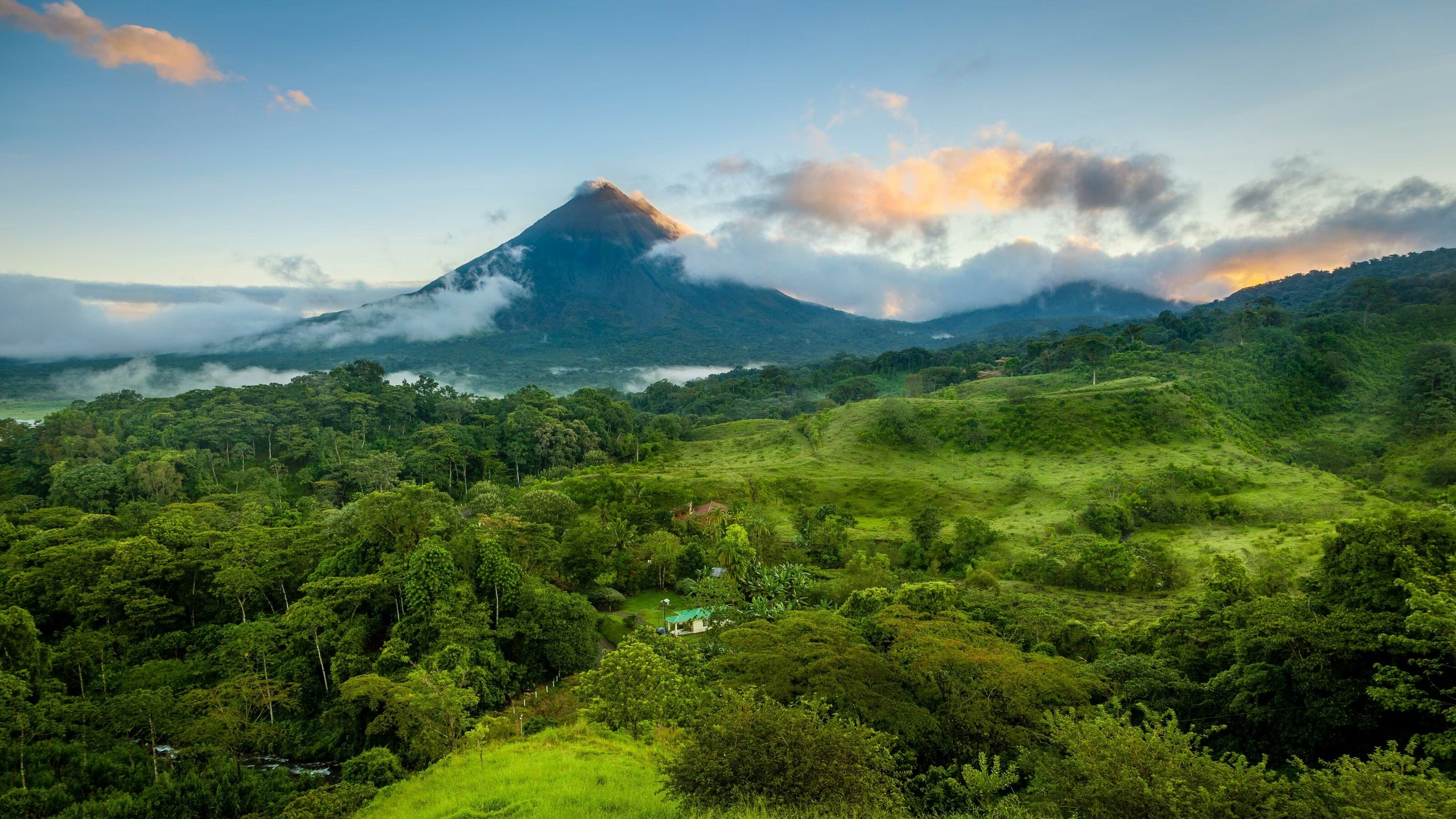
Arenal Volcano's peak glowing at sunset above a mist-covered rainforest valley.
Understanding Costa Rica’s Microclimates
To plan your trip, you have to think like a geographer. The country is split by a mountain range that dictates where the clouds go.
The Pacific Coast: Gold, Central, and South
The North Pacific (Guanacaste) is the driest part of the country. Even in the rainy season, it gets less water than the rest. As you move south toward the Osa Peninsula, the jungle becomes denser and the rainfall increases significantly. The South Pacific is a true tropical rainforest - hot, humid, and wet, but teeming with an outsized share of the country’s biodiversity.
The Caribbean Side: A Climate of Its Own
The Caribbean coast (Limón province) doesn't follow the Pacific rules. It can rain in February and be bone-dry in October. It is generally more humid and "wilder" feeling. If the Pacific weather forecast looks grim for your dates, look at the Caribbean - it’s often the inverse.
The Central Highlands and Cloud Forests
Places like Monteverde and the San Jose area in the Central Valley are much cooler. In the cloud forest, "rain" isn't always a downpour; it’s often a horizontal mist (neblina) that creates a mystical backdrop for birdwatching. Average temperatures here can drop into the 50s (F) at night, regardless of the season. Always pack a layer for the highlands.
👉 Craving the cool mist of Monteverde and the drama of Arenal Volcano? Our Costa Rica Discovery Tour takes you through the country’s most iconic highlands and landscapes.
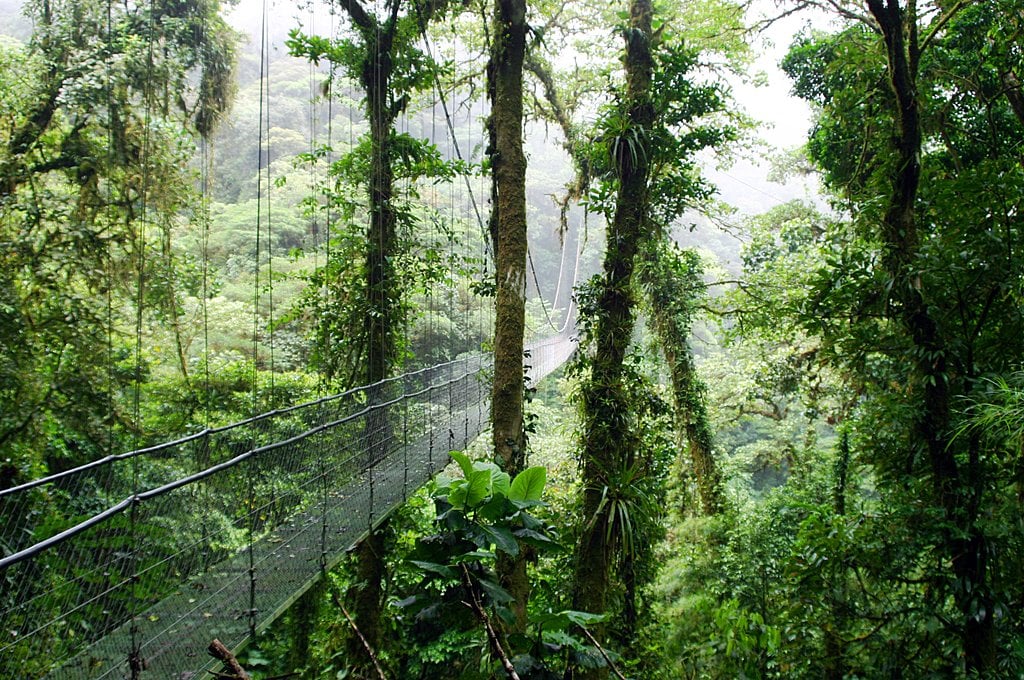
A suspension bridge stretching through the misty canopy of the Monteverde Cloud Forest.
Regional Festivals and Cultural Events You Shouldn’t Miss
Envision Festival (February)
For the "burners" and yoga enthusiasts, Envision is a massive transformation festival held in Uvita, just south of Dominical. It combines music, spirituality, and sustainability. The town swells in size, and the energy is electric, but book your accommodation a year in advance.
Limon Carnival (October)
While the rest of the country is hunkering down for the rain, Limón celebrates its Afro-Caribbean heritage with a vibrant carnival. Expect parades, colorful costumes, and the intoxicating rhythm of calypso music. It is a brilliant display of the "other" side of Costa Rican culture.
The Fiestas Zapote (December)
Between Christmas and New Year’s, San Jose hosts the Fiestas Zapote. This is where you’ll see Toros a la Tica (Costa Rican-style bullfighting where the bull is not harmed, but dozens of improvised bullfighters try to outrun it). It’s a chaotic, loud, and deeply authentic Tico experience.
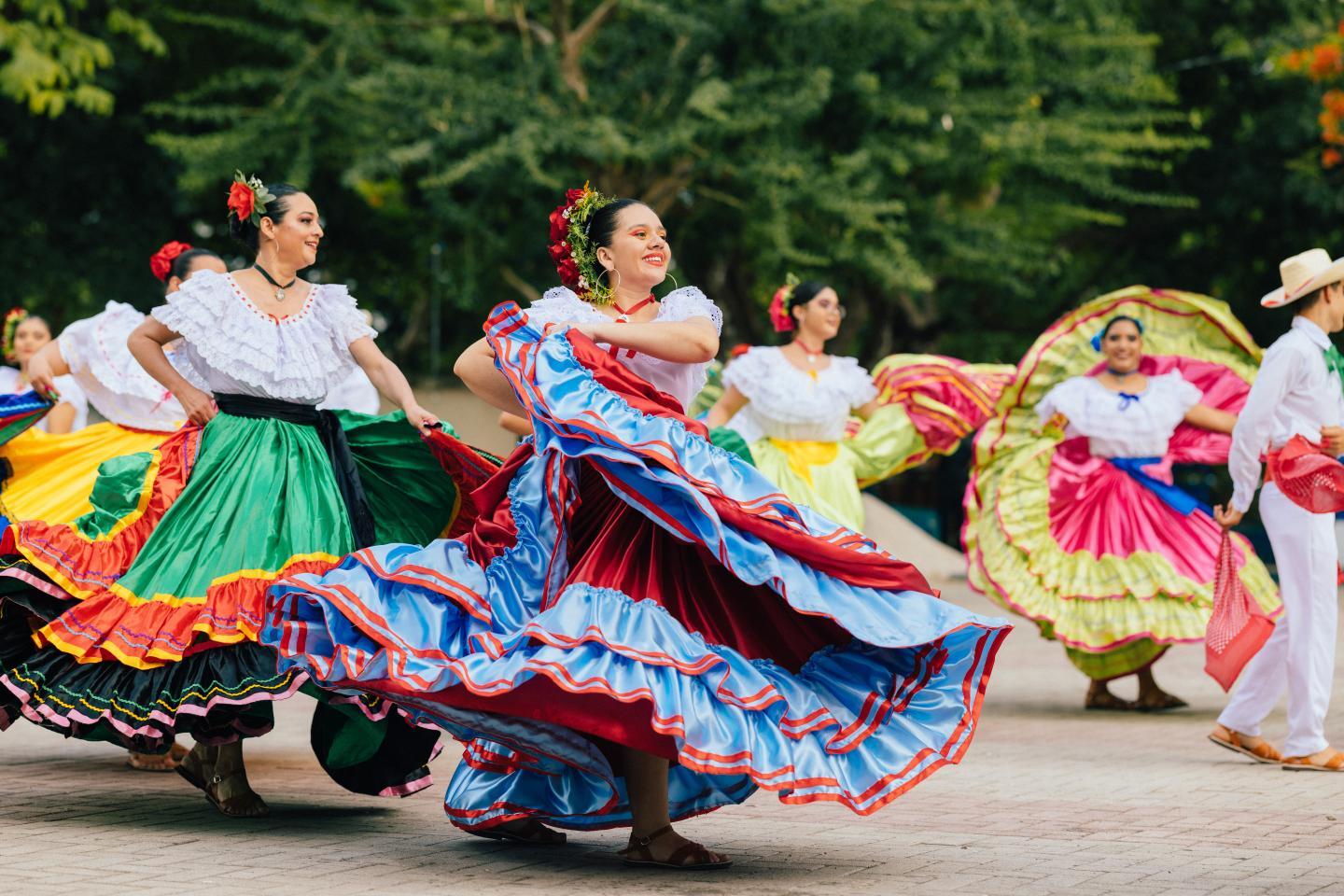
Costa Rican folk dancers twirling in colorful, ruffled traditional dresses during a lively cultural festival.
Practical Tips for Timing Your Logistics
When to Book Your Flights and Accommodations
If you are planning for the Dry Season (Nov–April), start your engines early. The best boutique hotels and eco-lodges book up 6 to 9 months in advance. For the Green Season, you can often be much more spontaneous, booking just a few weeks out or even "walking in" to find deals.
Packing for the Humidity and Sudden Downpours
In Costa Rica, cotton is your enemy - it never dries. Regardless of when you go, bring moisture-wicking fabrics. A lightweight, breathable rain shell is mandatory even in the dry season (you never know when a mountain cloud will burst). If you’re coming in the Green Season, bring a dry bag for your electronics and two pairs of shoes so one can dry while you wear the other.
Navigating the Roads: Dry vs. Wet Season Challenges
In the dry season, the biggest challenge is dust and potholes hidden by shadows. In the wet season, the challenge is river crossings and mud. If you are visiting the Nicoya Peninsula or the South Pacific between August and November, a 4x4 isn't a luxury; it’s a survival requirement. Check local surf reports or Waze - Ticos are great at updating road closures in real-time.
👉 Dreaming of trading the mud for soft sand instead? Our Beaches of Costa Rica Tour pairs the jungle beaches of Manuel Antonio with the laid-back shores of the Nicoya Peninsula.
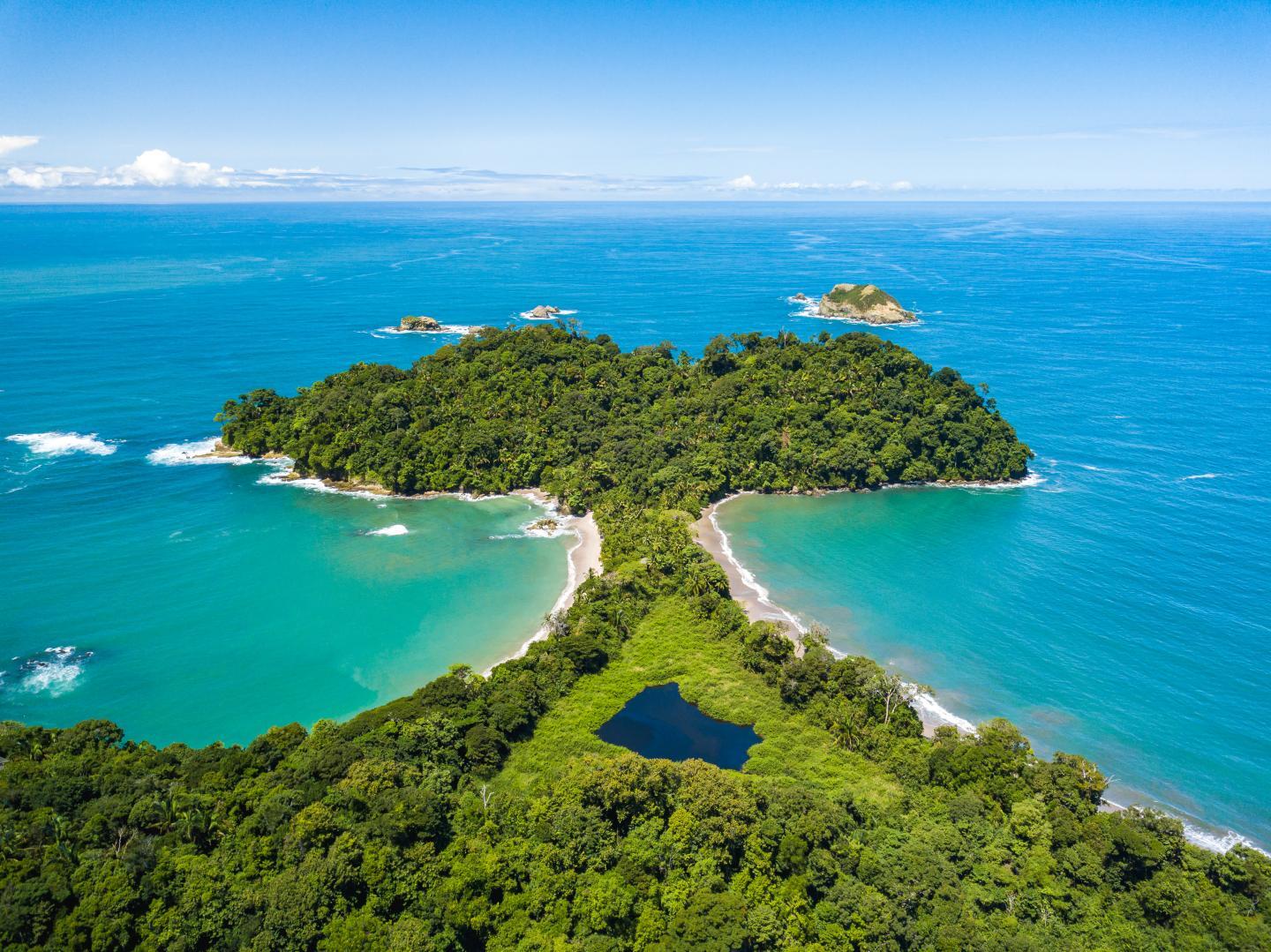
Aerial view of Manuel Antonio National Park's iconic twin coves and hidden lagoon.
The Verdict: When Should You Actually Go?
If I had to pin a calendar for a first-time visitor, I would tell them to aim for early December or the month of May. These "shoulder" periods offer the best of both worlds: the landscape is lush, the prices haven't skyrocketed (or have just started to drop), and you won't be fighting for a square inch of sand on the beach.
However, if you are a nature lover who doesn't mind a bit of mud on your boots, don't fear the rain. There is something profoundly magical about sitting on a porch in the rainforest, watching a tropical deluge transform the world around you while you sip a cup of Costa Rican coffee.
Costa Rica isn't about avoiding the elements; it's about immersing yourself in them. Whenever you choose to go, the Pura Vida spirit will be waiting for you. Just remember: bring a raincoat, an open mind, and a sense of adventure - the monkeys don't care what month it is, and neither should you.
👉 Ready to start planning? Our team would love to connect and help you build the perfect Costa Rica itinerary, whatever season you choose.