Argentina is not a country you simply "visit." It is a vast, rhythmic expanse that stretches from the subtropical humidity of the Brazilian border to the subantarctic winds of Tierra del Fuego. Because it spans more than 2,300 miles from north to south, the question of "when to go" isn't answered by a single date on a calendar. Instead, it’s about aligning your personal bucket list with the country’s dramatic seasonal shifts. Whether you are dreaming of sipping Malbec in the shadow of the Andes or watching blue ice calve off a glacier, timing is the difference between a good trip and a transformative one.
The Best Time to Visit Argentina: A Land of Eternal Seasons
If you are looking for the short answer, the "golden window" for a cross-country Argentinian odyssey falls during the shoulder seasons: September to November (Spring) and March to April (Fall). During these months, the weather is mild enough to enjoy a steak at a traditional estancia or an outdoor parrilla in Buenos Aires, yet stable enough to trek the rugged trails of El Chaltén.
However, Argentina’s charm lies in its extremes. Because the country is in the Southern Hemisphere, its seasons are the inverse of those in North America and Europe. When New York is shivering in January, Buenos Aires is basking in sultry summer heat. This inversion makes Argentina a premier "winter escape" for northern travelers, provided you know where the heat fuels the fun and where the wind might blow you off a mountain path.
Understanding Argentina’s Unique Geography and Climate
To plan effectively, you must stop thinking of Argentina as one climate zone. It is a vertical tapestry. The geography dictates the rules of engagement, and the weather here is a powerful character in your travel story.
The North vs. The South: A Tale of Two Hemispheres
In the North (Salta, Jujuy, and Iguazú), the climate is subtropical to high-altitude desert. Summers (December to February) can be punishingly hot and are often the rainy season, turning dirt roads into muddy adventures. Winters here are delightful: crisp, sunny, and dry.
Conversely, the South (Patagonia and Ushuaia) operates on a much tighter window. In the austral winter (June to August), much of the deep south effectively enters hibernation. High-altitude trails become impassable, and many boutique hotels close their doors. In Patagonia, summer is the king of seasons, offering long daylight hours that allow you to hike well into the evening.
High Season, Shoulder Season, and Low Season Explained
High season mirrors the summer sun (December through February) and the July ski break, marking the busiest peak season for tourism and the start of the ski season. This is when prices peak, and popular spots like the Perito Moreno Glacier within Los Glaciares National Park see the most foot traffic. Expect to book months in advance if you plan to visit during Christmas or Easter.
Low season hits in the winter months of May through August (excluding ski resorts). This is the time for budget travelers to thrive in the northern cities, but it’s a difficult time for those wanting to explore the wilder reaches of the south.
Shoulder seasons, the months flanking summer, are the sweet spots. The crowds thin out, the air is crisp, and the natural world is in transition, offering either the blooming flowers of spring or the fiery oranges of a Patagonian autumn.
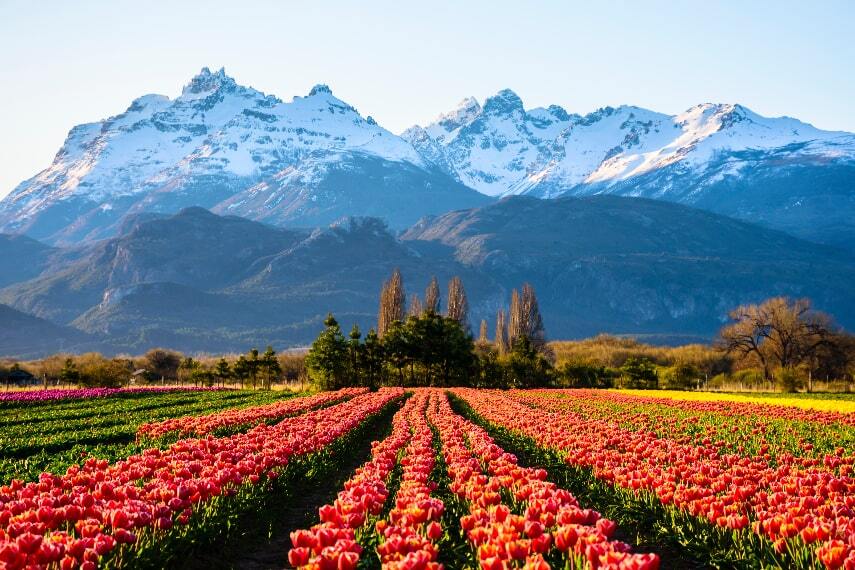
Vivid red and orange tulips stretch toward a range of snow-capped peaks under a clear blue sky.
The Overall "Sweet Spot": Why Spring and Fall Win
If you were to ask a local guide for their favorite time of year, they would likely point to October or April. In October, the "Spring Pulse" hits. The air in the capital is sweet, and the Patagonian winds haven't quite reached their summer peak. It is a time of birth and renewal, especially for wildlife enthusiasts heading to the coast.
Fall (March and April) offers a different kind of magic. This is the harvest season. In the vineyards of Mendoza, the grapes are heavy on the vine, and in Patagonia, the deciduous beech trees turn a vibrant, burning red that rivals any New England autumn. The temperatures are cool enough for strenuous hiking but warm enough that you won't need an arctic parka for a city stroll.
👉 Ready to see it all? Our Authentic Argentina Explorer Tour hits Iguazu Falls, Mendoza wine country, and the Perito Moreno Glacier in one seamless trip.
Chasing Glaciers and Peaks: When to Visit Patagonia
Argentine Patagonia is the crown jewel of Argentinian wilderness, but it is a fickle mistress. The weather here is famously unpredictable; locals say you can experience all four seasons in a single hour.
Summer (December to February): The Hiker’s Paradise
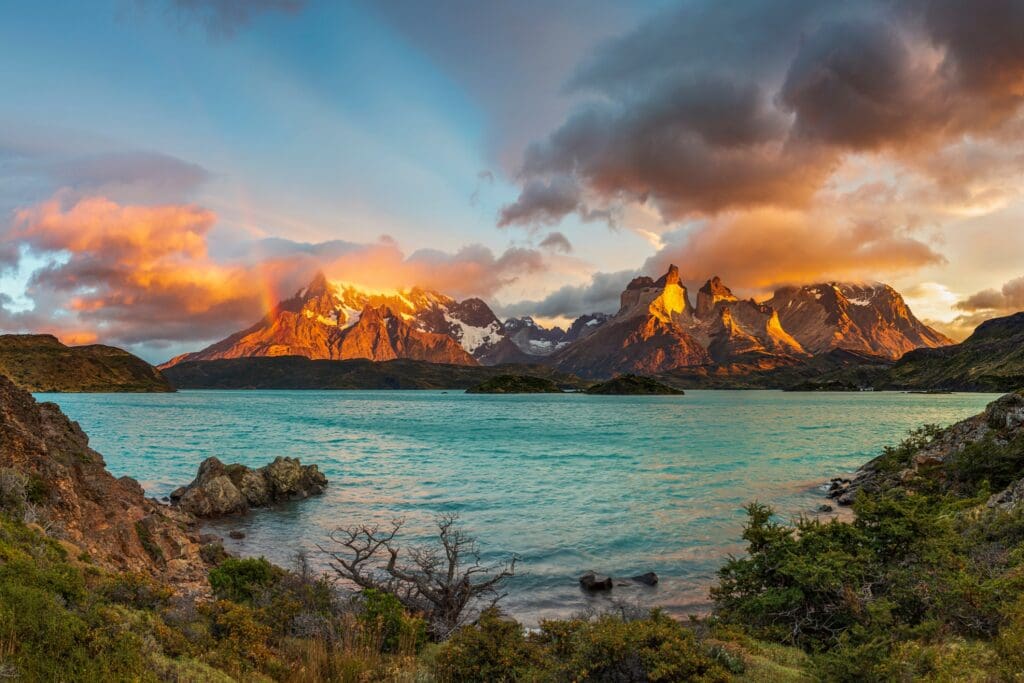
This is prime time for the legendary “W” trek in Chile’s Torres del Paine National Park and the Fitz Roy trails near El Chaltén, both of which see their most reliable conditions and lowest risk of snow-ins. (Guides note the Fitz Roy trek is generally passable from October through May, but summer offers the surest footing.) The days are incredibly long, with the sun often staying up until 10:00 PM. This gives you a massive safety margin for long hikes. The downside? The wind. Summer is the windiest season in Patagonia, with gusts occasionally strong enough to knock a grown adult off balance. It’s also the busiest time, so expect to share the view at the Laguna de los Tres with fellow adventurers.
👉 Craving that Patagonian summer adventure? Explore lakes, glaciers, and peaks on our Best of Patagonia: Lakes, Glaciers and Peaks tour.
Shoulder Season (October, November, March, April): Avoiding the Crowds
For those who value solitude, the shoulder seasons are superior. In November, the wildflowers (like the vibrant red Firebush) begin to bloom against the backdrop of snow-capped granite spires. In March, the winds die down, the lakes become glass-calm, and the photography lighting is exquisite. You’ll need more layers than in January, but you’ll have the trails, and the hotel discounts, mostly to yourself.
Winter in the South: What Stays Open?
Traveling to Southern Patagonia in July is an exercise in "slow travel." While many hiking hubs like El Chaltén become ghost towns, larger hubs like El Calafate and the ski slopes of Cerro Castor remain open. You can still see the Perito Moreno Glacier, and there is a stark, haunting beauty to the blue ice against the white snow. However, be prepared for limited transport options and very short days.
👉 Dreaming of Fitz Roy and El Chalten? Our Patagonia Explorer Tour combines the iconic trails of El Chalten with glacier trekking in El Calafate.
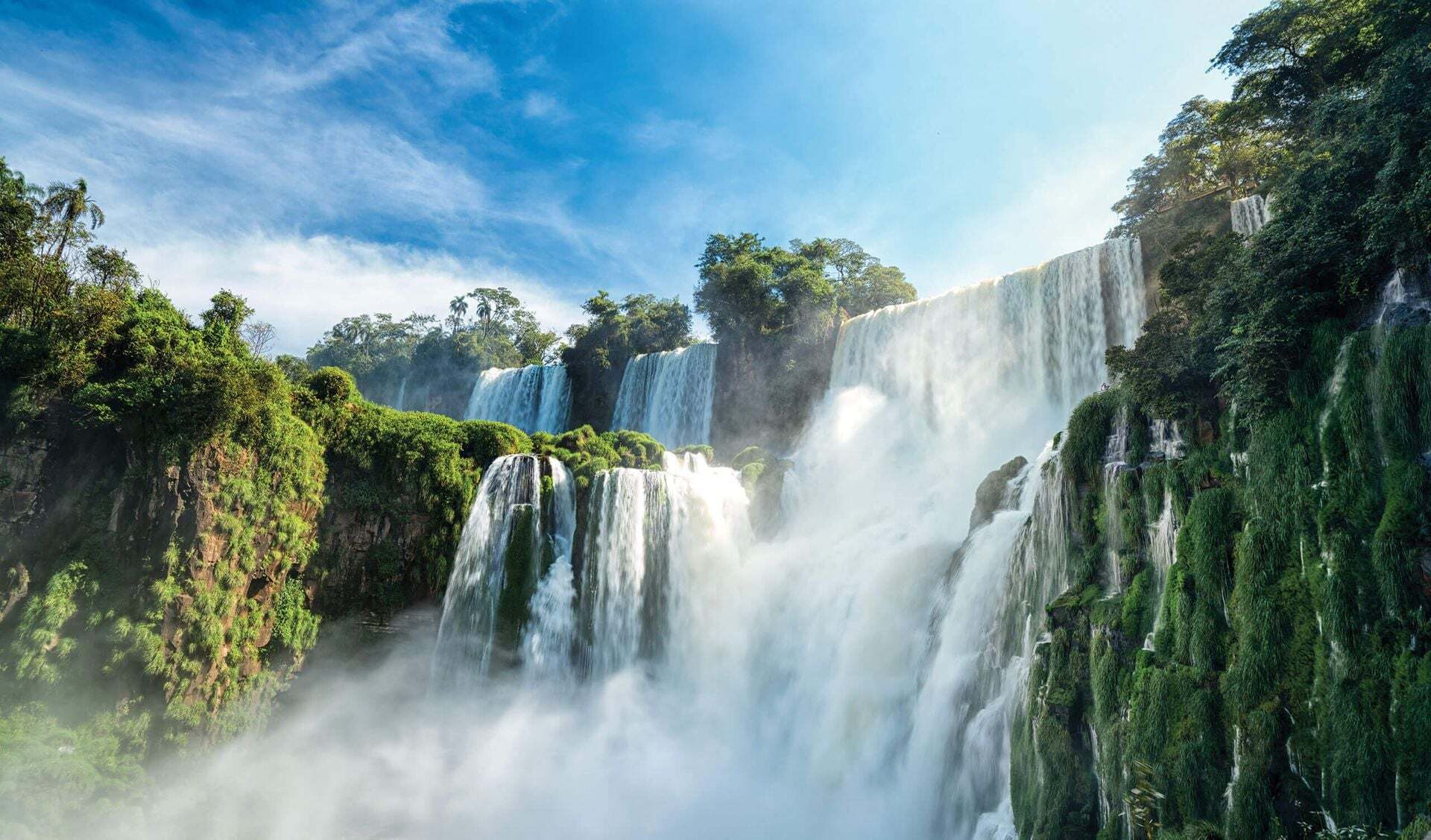
A wide, misty view of the multi-tiered Iguazú Falls cascading through lush green rainforest.
Thundering Waters: The Best Time for Iguazú Falls
Located in the tropical northeast, Iguazú Falls is a year-round destination, but the experience changes drastically depending on the rain.
Managing the Heat and Humidity
From December to February, the humidity at Iguazú can be stifling, often exceeding 90%. Walking the jungle trails feels like moving through warm soup. If you struggle with heat, aim for the winter months (June to August). The temperatures are a pleasant 70°F (21°C), making the long walks between the upper and lower circuits much more enjoyable.
Water Levels: When the "Devil’s Throat" is at its Best
To see the falls at their most powerful, the rainy season (January and February) is best. The volume of water is staggering, though occasionally, excessive flooding can lead to the temporary closure of the walkway to the Garganta del Diablo (Devil’s Throat). For the perfect balance of clear skies and heavy flow, the months of March, April, and September are generally considered ideal.
👉 Want to pair the falls with wetlands and wildlife? Our Wild Argentina Tour connects Iguazu to the Ibera Wetlands and the coastal wildlife of Puerto Madryn.
Malbec and Mountains: Timing Your Trip to Mendoza
Mendoza is the heart of Argentina’s wine country, sitting in the rain shadow of the Andes Mountains. Because it averages 300 days of sunshine a year, there is rarely a "bad" time to visit, but two periods stand out.
The Harvest Festival (Fiesta Nacional de la Vendimia)
If you love a party, aim for March. This is the Vendimia, the national harvest festival. The city erupts in parades, music, and, of course, endless wine tastings. It is a high-energy time, but be warned: hotels fill up a year in advance, and the city is at its loudest.
Winter in the Andes: Skiing and Cozy Bodegas
June through August transforms Mendoza into a dual-purpose destination. While the valley floor remains dry and cool, the nearby Andes are covered in snow. You can spend your morning skiing at Las Leñas and your afternoon tucked away in a cozy, fire-lit bodega sipping a bold red. It is the ultimate "luxury-meets-adventure" winter escape.
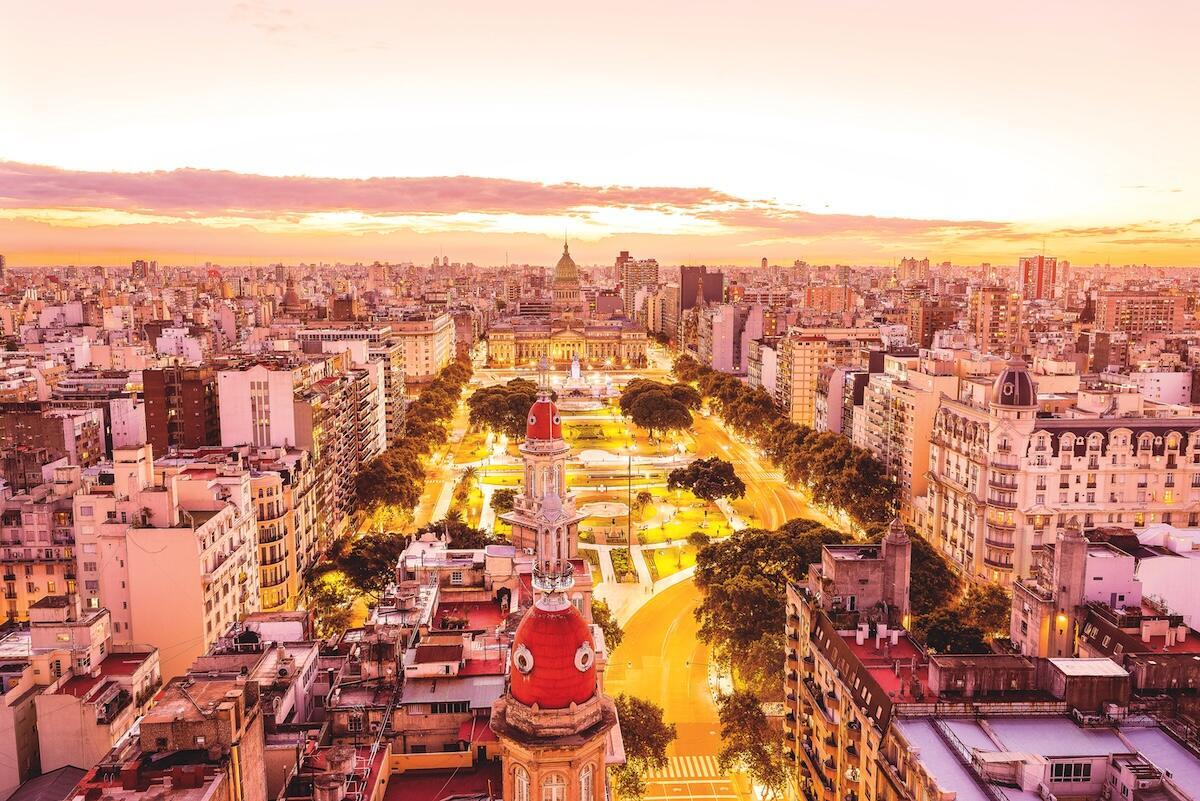
An aerial shot of Buenos Aires at sunset, with a glowing monument and plaza surrounded by city buildings.
Buenos Aires: The Best Months for a City Escape
The "Paris of the South" is a city of distinct moods. Because it is a concrete jungle, the heat of mid-summer (January) can be oppressive, leading many locals (Porteños) to flee to the coast, leaving the city feeling a bit hollow.
Jacaranda Season: Seeing the City in Purple
November is arguably the most beautiful month in Buenos Aires. This is when the city’s thousands of Jacaranda trees burst into bloom, carpeting the sidewalks of Palermo and Recoleta in a sea of lilac and purple. The weather is perfect for "flanerie", the art of aimless strolling, and the outdoor cafes are buzzing with life.
The Cultural Calendar: Tangos and Festivals
If you are a culture seeker, August is a standout month. Despite the chilly dampness, the city hosts the Buenos Aires Tango Festival, known as the World Tango Festival and Championship. You can catch world-class performances and join public "milongas" (tango dances) that keep the city warm through the winter nights.
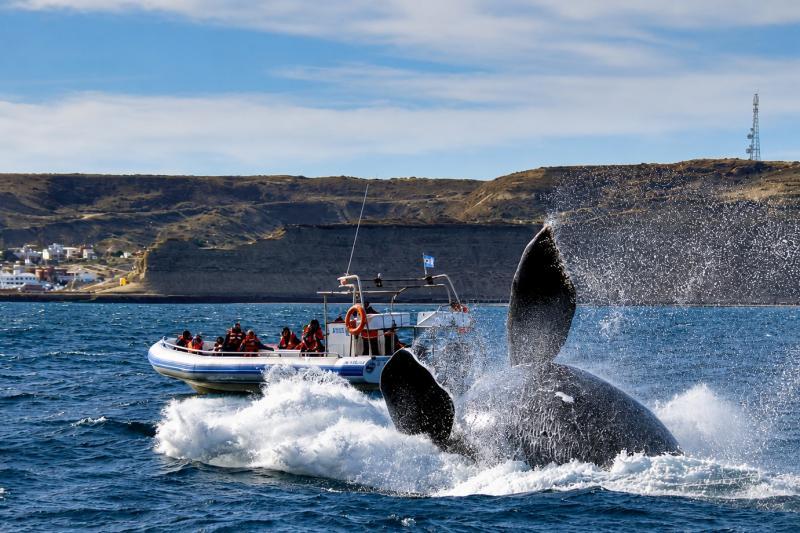
A large whale breaches beside a small tour boat full of passengers, with a view of Peninsula Valdes visible in the background.
Wildlife Watching in Peninsula Valdes and the Iberá Wetlands
For nature lovers, the calendar is dictated not by the sun, but by the migration patterns of animals.
Whale Watching Windows
Peninsula Valdes on the Atlantic coast is one of the world's great whale nurseries. The Southern Right Whales arrive in June and stay through December. For the best sightings, often right from the shore, aim for September and October, when mothers and calves are most active near the coast.
Penguin and Elephant Seal Cycles
Magellanic penguins start arriving in September to nest, with the fluffy chicks appearing in November and December. By March, they begin their migration back north. Similarly, elephant seals and sea lions are present year-round but are most active during the breeding season from September to March. If you want the "Grand Slam" of wildlife, October is your undeniable winner.
👉 Chasing the wildlife Grand Slam? Our Patagonia and Penguins Tour takes you from Ushuaia’s glaciers to the penguin colonies of Puerto Madryn.
Practical Travel Considerations by Month
Flight Costs and Availability
Internal flights in Argentina (largely operated by Aerolíneas Argentinas) fluctuate wildly. Prices skyrocket during the "Quincena" (the first and second halves of January) and during the July winter break. If you are flying between regions, say, from Iguazú to Ushuaia, booking three to four months in advance is essential during these peaks. In the shoulder months of May or October, you can often find much more flexible pricing.
Local Holidays You Should Know About
Argentina takes its holidays seriously. During Semana Santa (Easter Week) and Carnival (February), the entire country moves. Public transport is packed, and many shops in smaller towns will close. Conversely, the national holiday of May 25th (Revolution Day) is a fantastic time to be in the cities to witness traditional parades and eat locro, a hearty traditional stew.
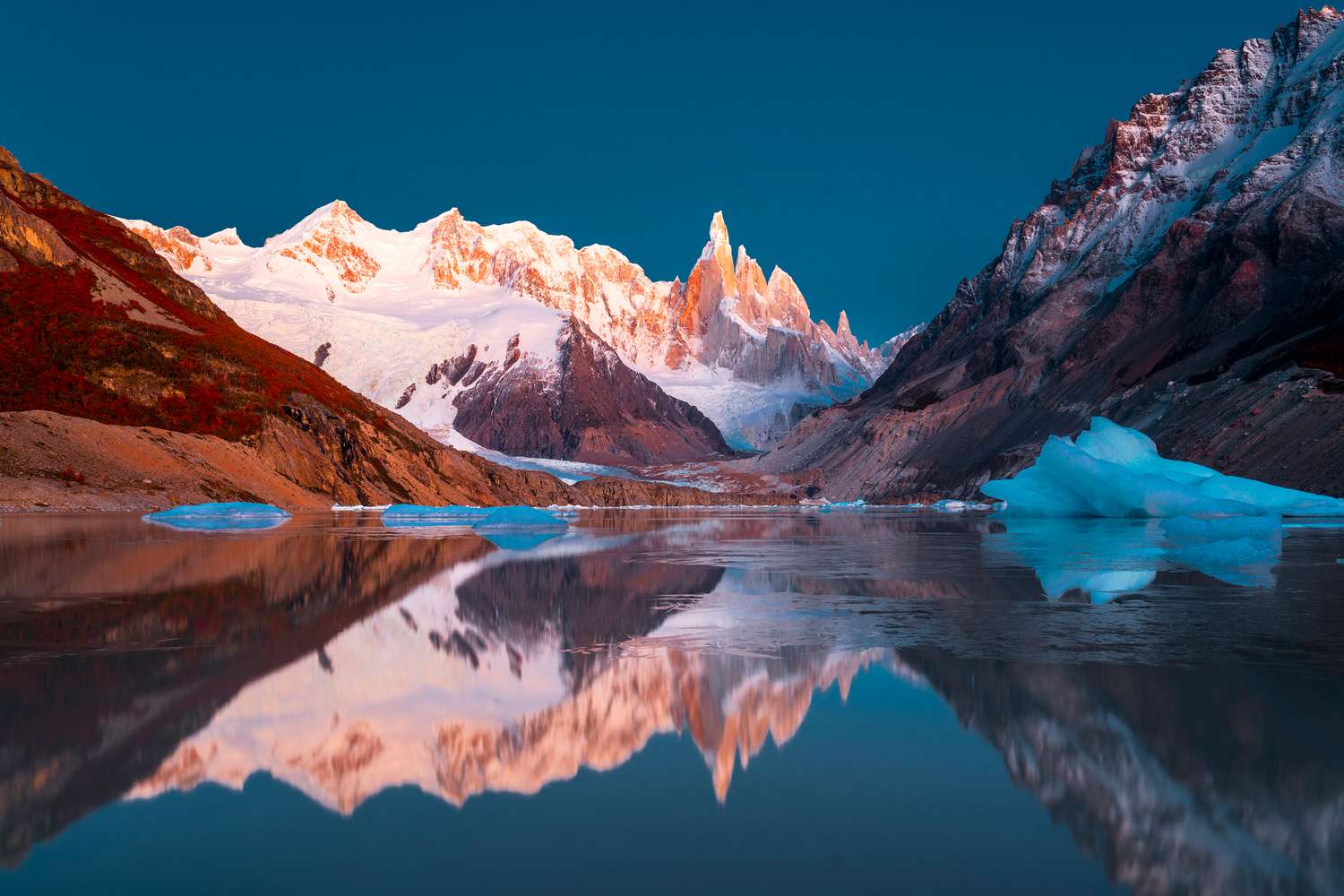
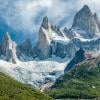
View of snow-dusted granite peaks of Fitz Roy massif near El Chaltén in Los Glaciares National Park.
Final Recommendations: Creating Your Perfect Argentina Itinerary
To get the most out of this massive country, your itinerary should follow the weather.
If you have two weeks in November, start in the north at Iguazú, visit the colonial heart of Córdoba, spend a few days under the purple trees of Buenos Aires, and finish with a trek in the crisp spring air of El Chaltén.
If you are visiting in March, prioritize the wine harvest in Mendoza and the stunning autumn colors of the Lake District near Bariloche.
Argentina rewards the curious and the flexible. It is a country that doesn't just ask you to look at it, but to feel it: through the spray of a waterfall, the bite of a Patagonian wind, or the warmth of a Malbec. Pick your season, pack your layers, and prepare for a journey that spans the entire spectrum of the natural world.
👉 Ready to start planning? Our team would love to connect and help you design the perfect Argentina itinerary. Contact us today to get started!