Costa Rica is not merely a destination; it is a place that recalibrates how you interact with the world. It is the smell of damp earth in a forest that has been breathing for millennia, the jarring roar of a howler monkey that sounds more like a lion than a primate, and the realization that "luxury" might mean a thermal river in the middle of a jungle rather than a five-star lobby. To truly understand why this small stretch of the Central American land bridge - shared with neighboring Panama - captivates everyone who touches its soil, we have to look past the postcard.
Costa Rica is More Than Just a Postcard
The world is full of beautiful beaches, but very few places offer a "collision of worlds" quite like Costa Rica. Within a few hours of driving, you can transition from the salt-crusted surf culture of the coast to the shivering heights of a volcano or the ethereal, mist-draped silence of a cloud forest.
Why the "Beach Destination" label only tells half the story
Labeling Costa Rica as a "beach destination" is a disservice because it ignores the verticality of the landscape. The beaches are the perimeter, but the soul of the country is found in its rugged interior. While the coast offers relaxation, the mountains offer transformation. When you move inland, the humidity drops, the air thins, and the vegetation of the lush rainforests becomes an aggressive, vibrant green that seems to swallow the roads. This topographical diversity means that your itinerary isn't just a list of locations-it’s a collection of entirely different ecosystems. You aren't just visiting a country; you’re visiting a microcosm of the planet.
👉 See it for yourself: browse our Costa Rica Tours and start building your own itinerary through the beaches, volcanoes, and cloud forests!
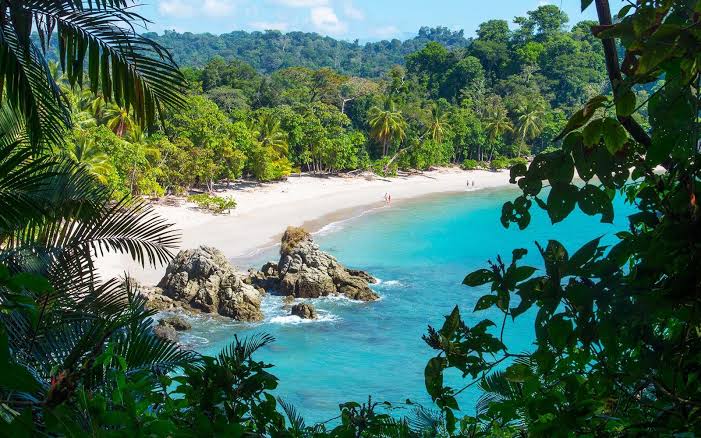
View through tropical palm fronds of a secluded turquoise cove beach framed by rainforest and rocky outcrops on Costa Rica's Pacific coast.
The "Pura Vida" Philosophy: It’s Not Just a Slogan, It’s a Survival Skill
You will hear it the moment you step off the plane in San Jose. Pura Vida. It translates literally to "Pure Life," but in practice, it is the Swiss Army Knife of the Spanish language. It is a greeting, a farewell, an "everything is okay," and a "don’t worry about the rain."
Defining the heartbeat of the Tico culture
To the locals (Ticos), Pura Vida is an acknowledgment that life is fleeting and inherently good, despite its inevitable hiccups. It is an emotional resilience that prioritizes human connection and presence over efficiency and deadlines. When a Tico tells you "Pura Vida" after a bus is late or a sudden downpour soaks your lunch, they aren't being dismissive. They are reminding you that you are alive, the air is clean, and the sun will eventually return.
How slowing down changes your perspective on travel
Most of us travel with a "check-list" mentality. We want to see the waterfall, take the photo, and move to the next waypoint. Costa Rica rejects this pace. The roads are winding, the wildlife is camouflaged, and the weather is unpredictable. The Pura Vida mindset forces you to surrender. When you stop fighting the clock, you start noticing the details: the iridescent wings of a Morpho butterfly or the way the light filters through the canopy. This shift in perspective is the greatest souvenir you can take home-the ability to be present in the middle of chaos.
The Biodiversity Paradox: 0.03% of the Land, 5% of the Species
There is a statistical anomaly in Costa Rica that defies logic. The country occupies only 0.03% of the earth's landmass, yet it guards nearly 5% of the world's biodiversity. To put that in perspective, walking through a Costa Rican forest is like stepping into a room where the volume of life has been turned up to ten.
Walking through a Cloud Forest: The Monteverde experience
In Monteverde, you don’t just walk through the forest; you walk through the clouds. At high altitudes, the moisture clings to the trees, creating an environment where every square inch of bark is covered in moss, ferns, and orchids. It is a vertical garden that feels ancient and whispered. Here, the Resplendent Quetzal-a bird so vibrant it looks like a Mayan myth-darts through the mist. The silence of the cloud forest is heavy and sacred, a stark contrast to the buzzing cicadas of the lowlands.
Wildlife encounters that aren't staged: Sloths, Macaws, and Coatis
The magic of Costa Rican wildlife is its lack of artifice. This isn't a zoo or a staged safari. You will be eating breakfast when a troop of Capuchin monkeys decides to traverse the roof of your lodge. You will look up at a seemingly ordinary tree and realize a three-toed sloth or a pair of brightly-billed toucans has been staring at you for twenty minutes. In the Osa Peninsula, home to Corcovado National Park, Scarlet Macaws fly in pairs, their crimson feathers painting streaks across the sky. These encounters demand nothing from you but your observation, fostering a rare sense of kinship with the natural world.
👉 Want to spot sloths, macaws, and quetzals? Our Costa Rica Discovery Tour takes you through Monteverde, Arenal, and Manuel Antonio, three of the country’s richest wildlife hotspots.
Why "Green" isn't a marketing buzzword here-it's a way of life
While the rest of the world is debating sustainability, Costa Rica is living it. Over 25% of the land is protected in national parks or private reserves, and the country frequently runs on nearly 100% renewable energy. This isn't a trend; it's a national identity. When you visit, you aren't just a tourist; you are a patron of a massive conservation experiment. Your entrance fees help buy back corridors for jaguars and protect nesting sites for sea turtles.
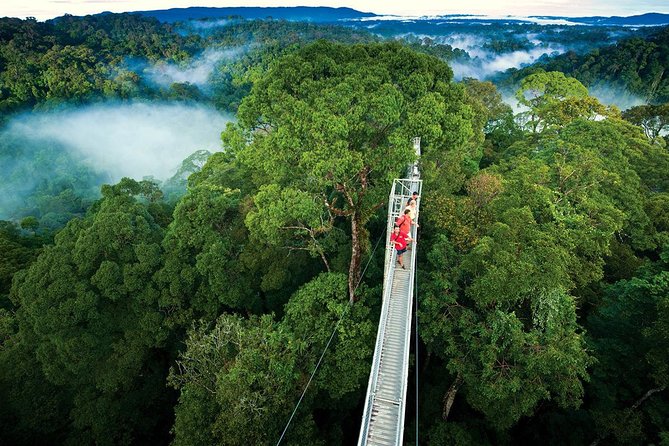
Aerial view of hikers crossing a suspended footbridge over a misty rainforest canopy on a classic Costa Rican canopy tour.
Adventure That Demands Your Full Attention
If you are looking for a sterilized, "Disney-fied" version of adventure, you are in the wrong place. Adventure in Costa Rica is visceral. It’s the kind of activity that makes your palms sweat and your heart hammer against your ribs.
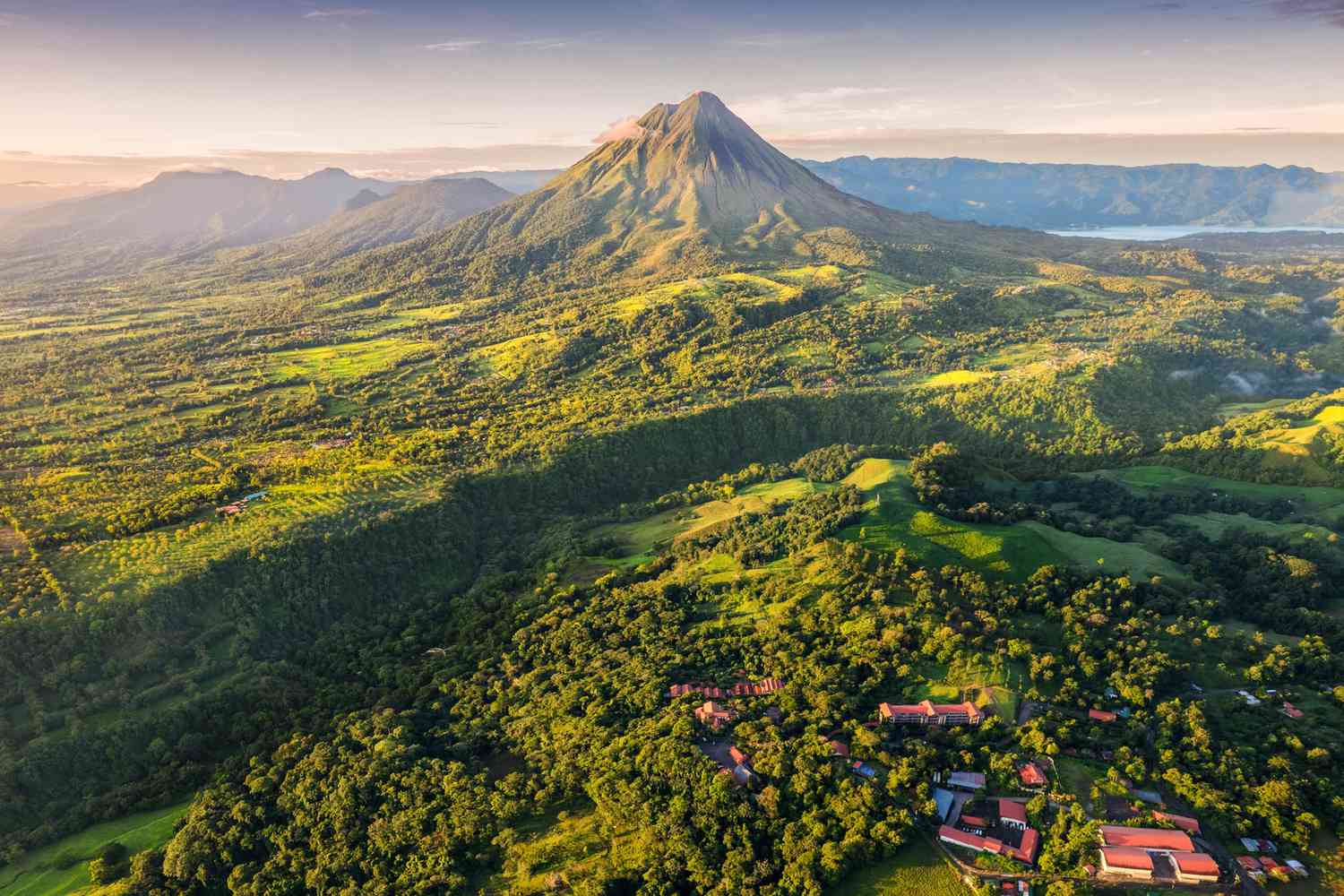
Volcanoes and Vents: The geological power of Arenal
The Arenal Volcano stands as a perfect, hulking cone over the town of La Fortuna. While it hasn't spewed lava since 2010, its presence is felt everywhere. The ground beneath you is literally humming with geothermal energy. Hiking the lava fields from the 1968 eruption is a humbling reminder of the earth’s power to destroy and recreate. The jagged volcanic rocks underfoot are the "bones" of the earth, and standing in their shadow makes your daily stresses feel remarkably small.
From Whitewater Rafting to Canopy Tours: Finding your adrenaline threshold
The Pacuare River is often cited as one of the most beautiful rafting rivers in the world, and for good reason. As you navigate Class III and IV rapids, you are flanked by towering canyon walls draped in emerald vines. Then there are the zip-lines-the "canopy tours" that were actually pioneered here for scientific research. Whether it is horseback riding through the hills or flying hundreds of feet above the forest floor on a steel cable, it is the closest you will ever get to feeling like a bird of prey. It is terrifying, exhilarating, and absolutely necessary.
Surfing the "Endless Summer": Pavones and the Pacific coast
For those who find their adrenaline on the water, the Pacific coast and the turquoise Caribbean Sea, from the bustling waves of Jaco to the remote south, offers a legendary pilgrimage. Pavones is home to one of the longest left-hand breaks in the world. On a good day, a surfer can ride a single wave for over a minute. But even if you aren't a pro, the surf culture here is infectious. It’s a community built on the tide charts, where the most important question of the day is simply, "Is the swell in?"
👉 Ready for your own dose of adrenaline, followed by some well-earned relaxation? Our Beaches of Costa Rica Tour pairs adventure in Manuel Antonio with laid-back beach time on Playa Quizales.
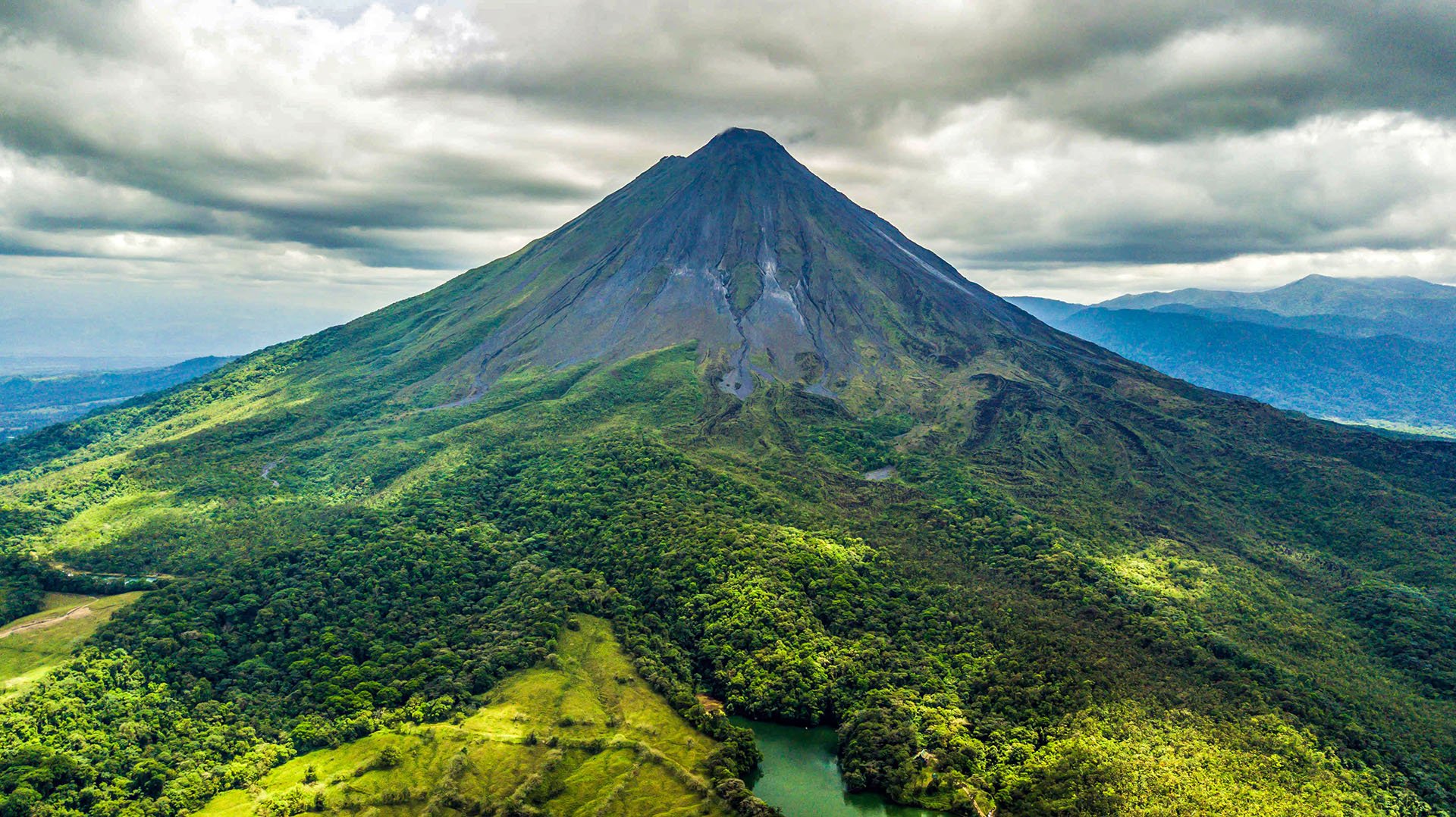
View of the perfectly conical Arenal Volcano rising above lush green rainforest beneath a moody, cloud-filled sky.
Healing Landscapes: The Therapeutic Power of the Jungle
There is a growing body of evidence suggesting that "forest bathing" can lower cortisol and boost the immune system. Costa Rica is essentially one giant outdoor clinic.
Blue Zone living: Lessons in longevity from the Nicoya Peninsula
The Nicoya Peninsula is one of only five "Blue Zones" in the world-places where people regularly live past the age of 100. Their secret isn't a supplement or a gym routine; it’s a combination of mineral-rich water, a diet of "the three sisters" (corn, beans, and squash), and a profound sense of social belonging. Spending time here allows you to observe a lifestyle that prioritizes movement and community over consumption.
Thermal Hot Springs: Nature’s own spa day
Thanks to the volcanic spine of the country, natural hot springs are abundant. In places like Tabacon or Rio Perdido, you can soak in mineral-rich waters heated by the magma deep below the surface. Sitting in a warm river while a cool rain falls on your shoulders is a sensory paradox that melts away years of accumulated tension.
The connection between raw nature and mental clarity
We spend most of our lives staring at screens that are 12 inches from our faces. In the Costa Rican wild, your focus shifts to the horizon. This "soft fascination" with nature allows the brain to recover from the cognitive fatigue of modern life. You don't just feel relaxed; you feel restored.
👉 Craving that same mix of wellness, wildlife, and family time? Our Costa Rica Family Explorer Tour connects the turtle-nesting beaches of Tortuguero, the hot springs of Arenal, and the shores of Guanacaste.
-1.jpeg?width=678&height=452&name=images%20(2)-1.jpeg)
Elevated view of a crescent-shaped beach with anchored boats, umbrellas, and swimmers in turquoise water on Costa Rica's Pacific coast.
A Food Scene Built on Freshness and Community
Costa Rican cuisine is often overshadowed by its flashier neighbors, but its brilliance lies in its simplicity and the "zero-mile" reality of its ingredients.
The humble magic of the "Casado"
The Casado is the quintessential Costa Rican meal. It translates to "married man," implying that this is the kind of hearty, balanced meal a husband would be served at home. It consists of gallo pinto (rice and beans), a protein (fish, chicken, or beef), fried plantains, a salad, and usually a slice of local cheese. It is a plate of harmony-salty, sweet, starch, and crunch. It is honest food that fuels a day of exploration.
Coffee Culture: Following the bean from farm to cup
You haven't truly tasted coffee until you’ve had it in the Central Valley, where the volcanic soil and altitude create the perfect conditions for Arabica beans. Visiting a family-run finca (farm) teaches you that coffee isn't just a caffeine delivery system; it’s a craft. Watching the labor-intensive process of picking, drying, and roasting gives you a new appreciation for the "black gold" in your cup.
Farmers Markets (Ferias): The best way to meet the locals
If you want to see the real Costa Rica, go to a Feria on a Friday or Saturday. You’ll find fruits you’ve never heard of-like the hairy Rambutan (mamon chino) or the creamy Guanabana. These markets are the social hubs of the towns, where grandmothers haggle over tomatoes and children play between the stalls. It is the best place to practice your Spanish and taste the literal fruits of the land.
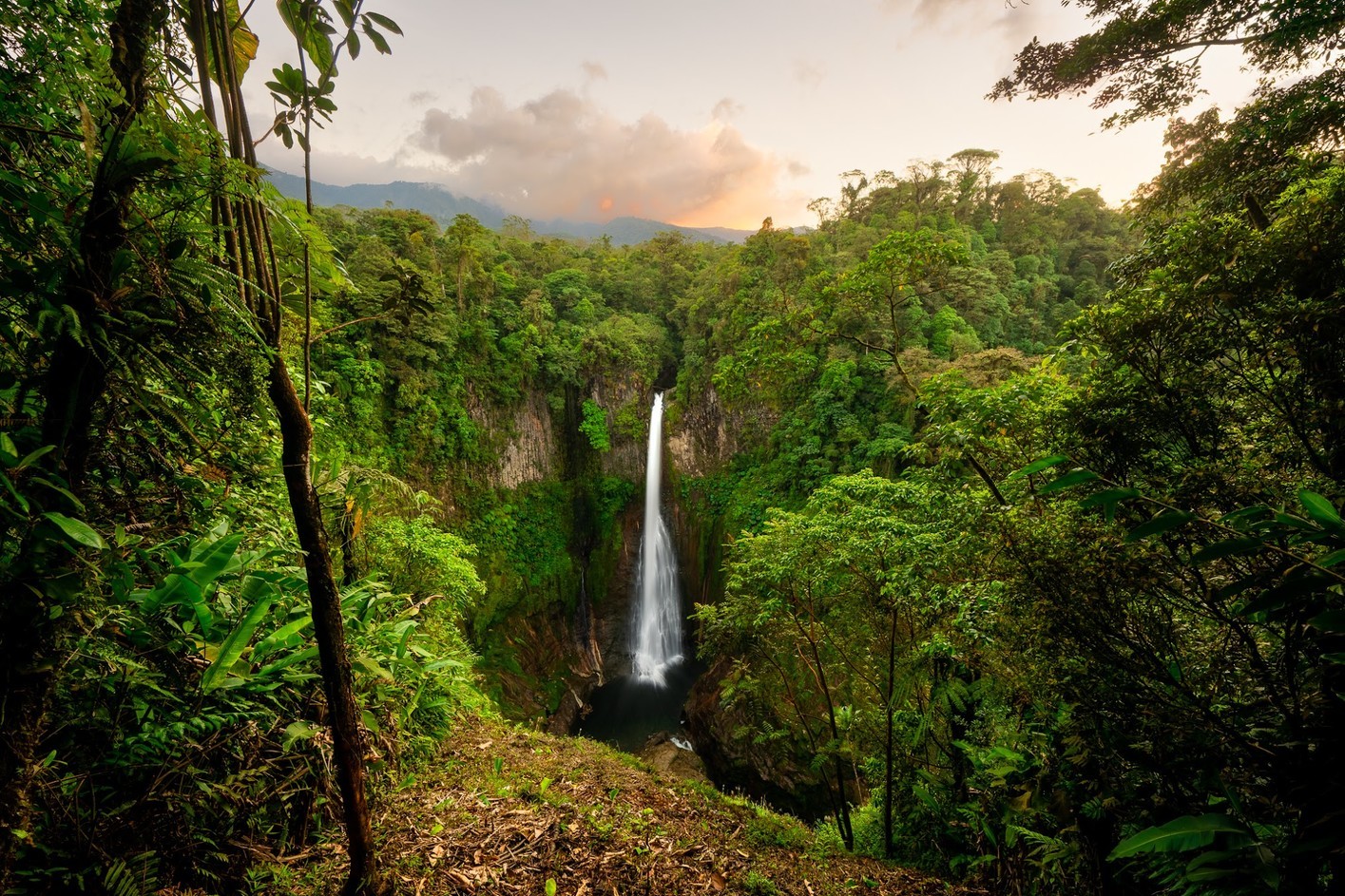
View of a tall waterfall cascading into a lush rainforest gorge at sunset in Costa Rica.
Responsible Travel: How Your Visit Protects the Planet
When you travel to Costa Rica, your dollars act as a vote for the environment. The country has successfully decoupled economic growth from environmental destruction.
The Costa Rican model for sustainable tourism
The "Certification for Sustainable Tourism" (CST) program ensures that hotels and tour operators are actually walking the walk. From waste management to water conservation, these businesses are audited to ensure they aren't harming the very ecosystems people come to see.
Supporting local micro-economies and eco-lodges
By staying in locally-owned eco-lodges rather than massive international chains or all-inclusive resorts, you ensure that your money stays within the community. This creates a virtuous cycle: when locals see that their natural resources are more valuable intact than they are harvested, conservation becomes the obvious choice.
Practical Wisdom for Your First (or Fifth) Visit
To navigate Costa Rica like a pro, you have to embrace its quirks.
Microclimates: Packing for four seasons in one day
You can be sweating in a swimsuit in Manuel Antonio at noon and shivering in a fleece in San Gerardo de Dota by sunset. The key is layers. Always pack a high-quality rain shell, even in the dry season. The rain here isn't an inconvenience; it’s the lifeblood of the forest.
Navigating the "Soda" vs. Restaurant landscape
If you want the best food and the lowest prices, look for a "Soda." These are small, family-run eateries that serve traditional Tico fare. They are the heart of the local food scene. If a Soda is packed with locals during lunchtime, you’ve found the right spot.
The best time to go (and why the "Green Season" is a hidden gem)
Most people flock to Costa Rica during the dry season (November to April). However, the "Green Season" (May to November) is arguably better. The landscapes are more vibrant, the crowds are thinner, the prices are lower, and the afternoon rains provide a much-needed cooling break.
👉 Browse all of our Costa Rica Tours to find your perfect itinerary.
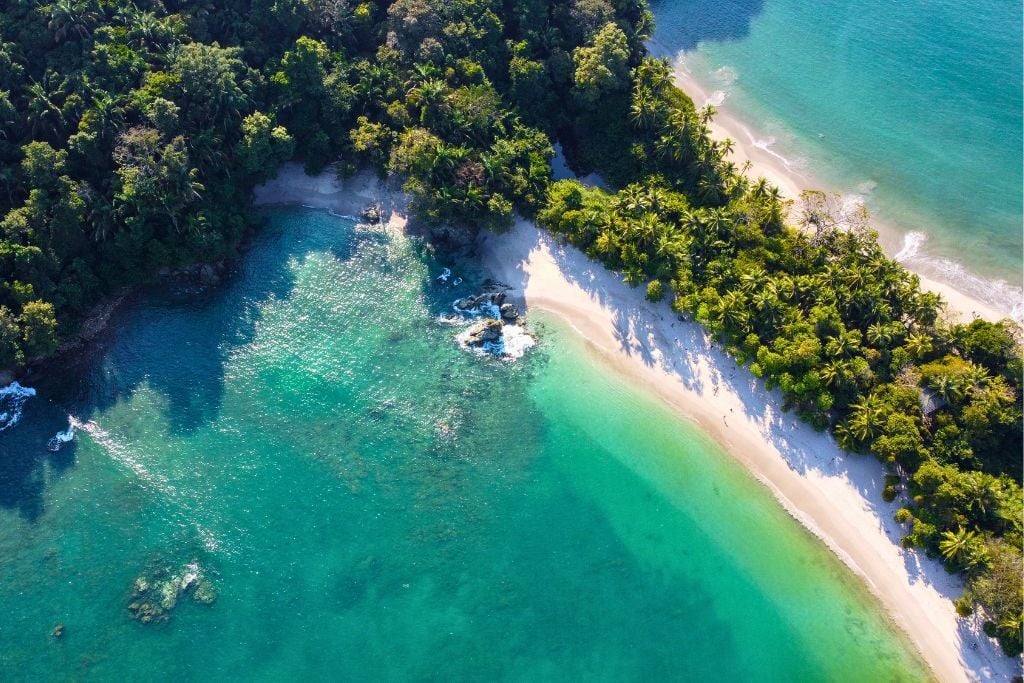
Aerial view of a forested peninsula meeting turquoise water and white sand coves along Costa Rica's coastline.
Your Invitation to the Wild
Costa Rica is a place that asks you to be more than a spectator. It asks you to sweat, to get your boots muddy, to wake up with the sun, and to listen to the rhythm of a world that hasn't been paved over. It is a reminder that we are part of something much larger, older, and more beautiful than our daily routines.
The beaches, from the golden sands of Tamarindo to the lush Caribbean side and the wild Osa, will always be there, and they are spectacular. But the real reason to visit is to find that moment of "Pura Vida"-that sudden, sharp realization that life, in its purest and wildest form, is exactly where you are supposed to be. The jungle is calling. It’s time to answer.
👉 Ready to Start Planning? Our team would love to connect. Contact Us today and let’s start building your perfect Costa Rica adventure!